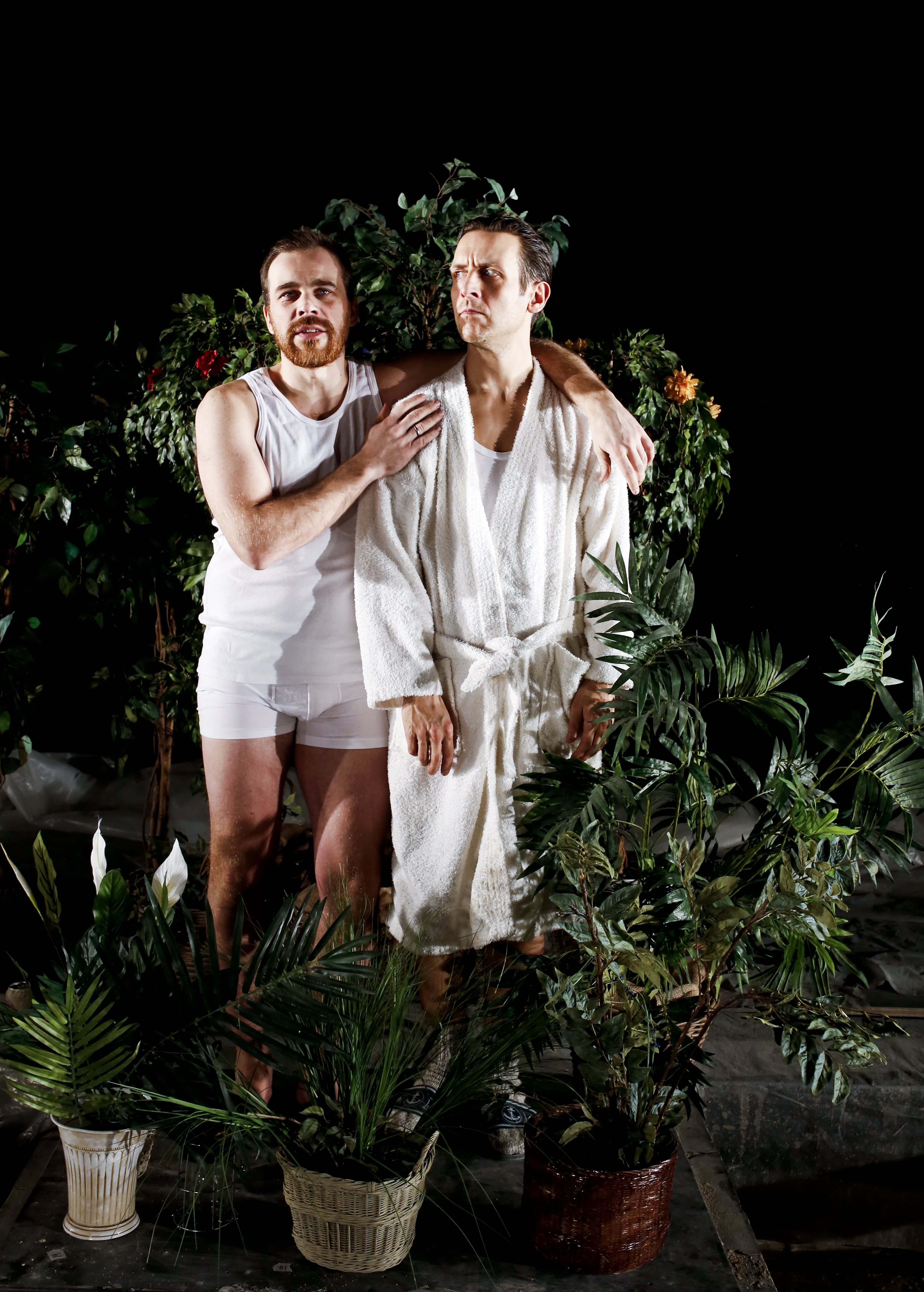
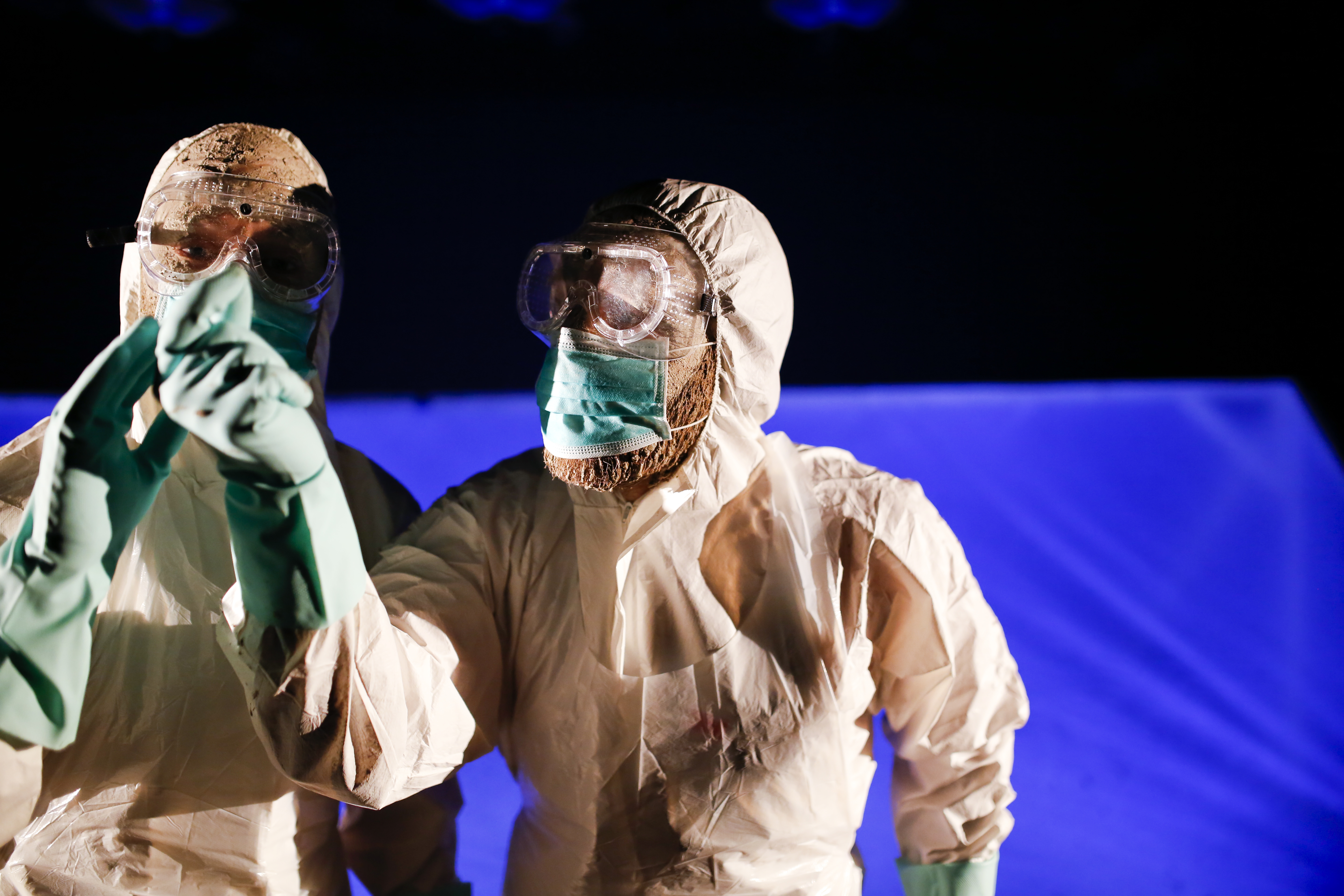
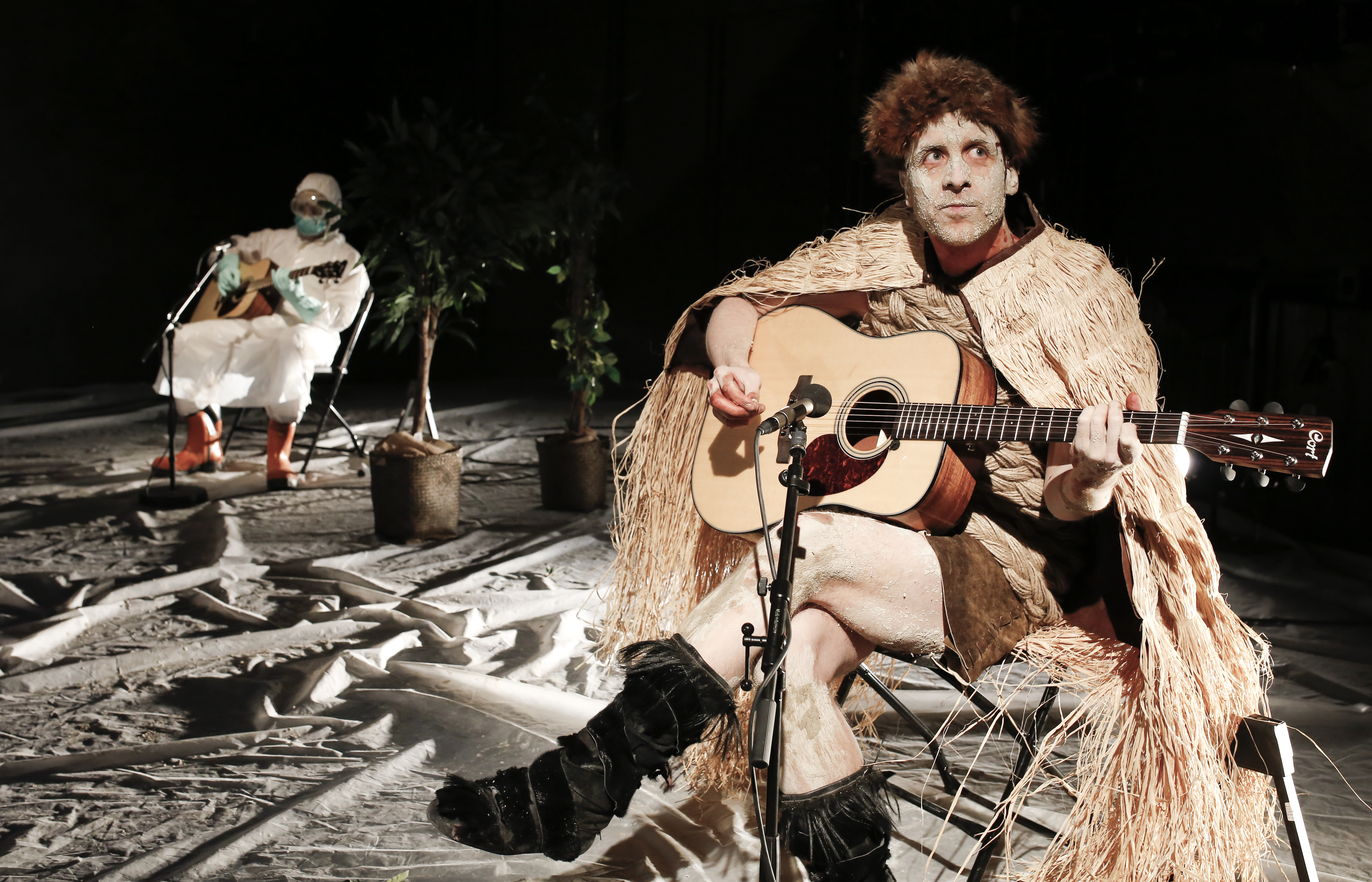
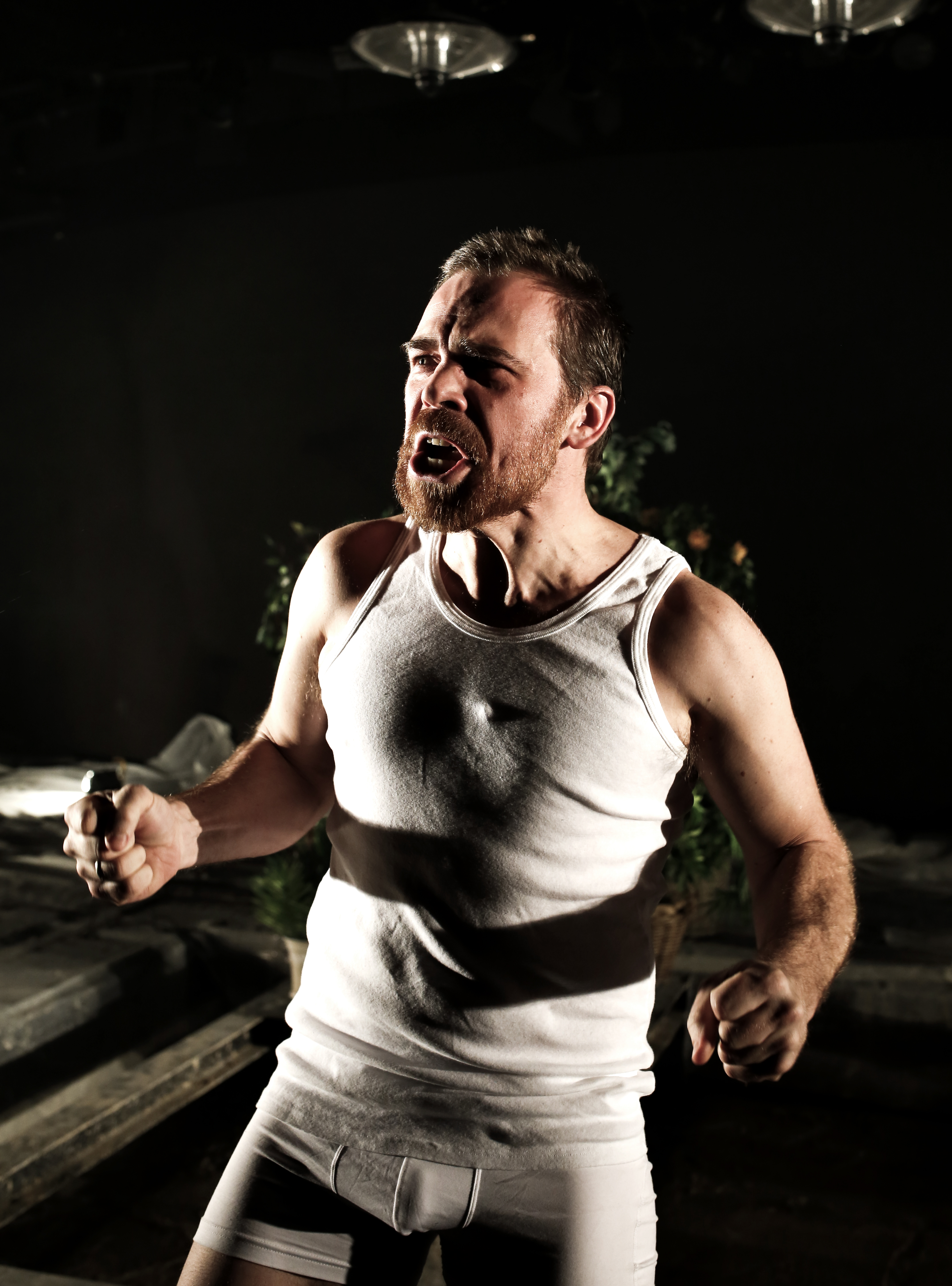
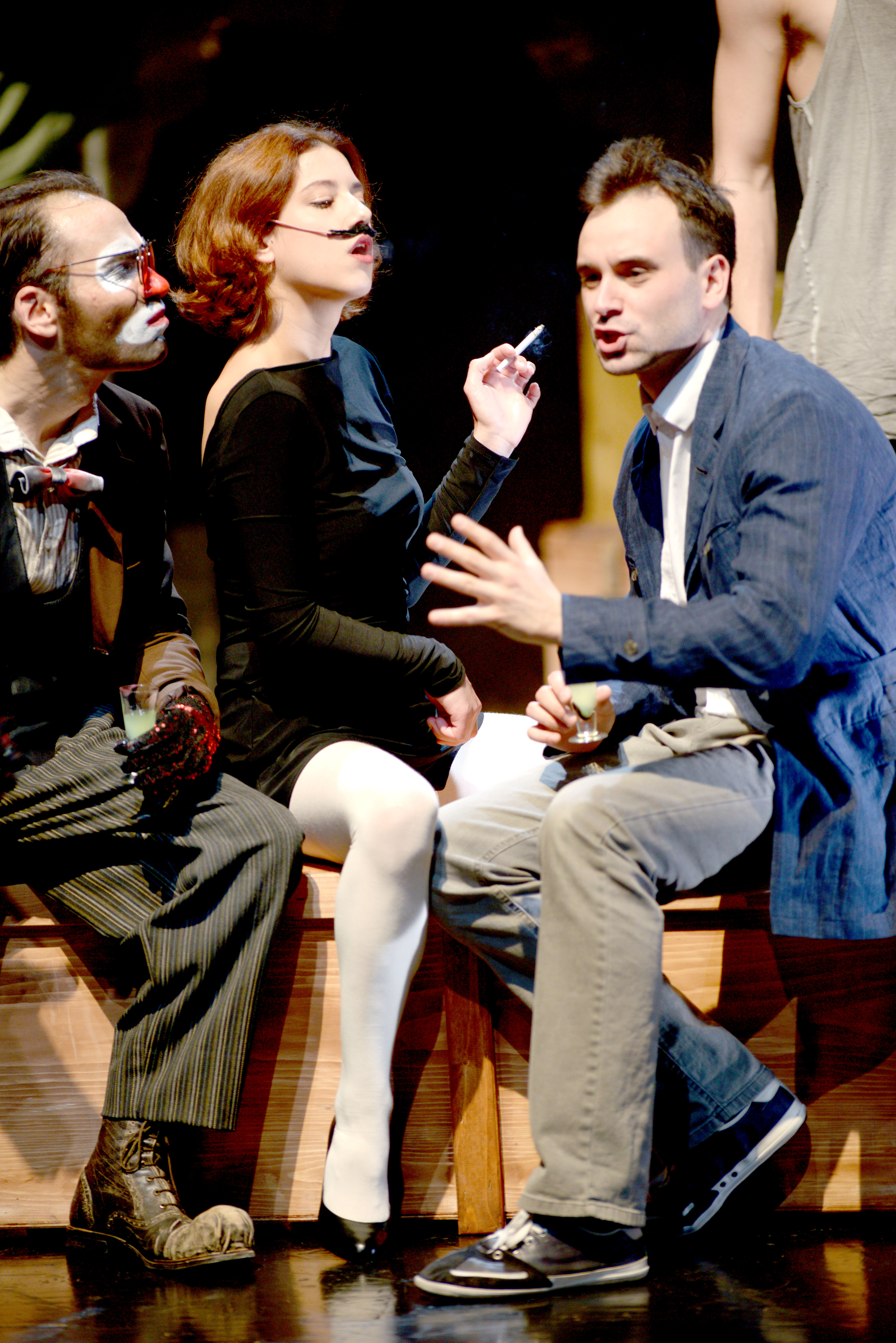
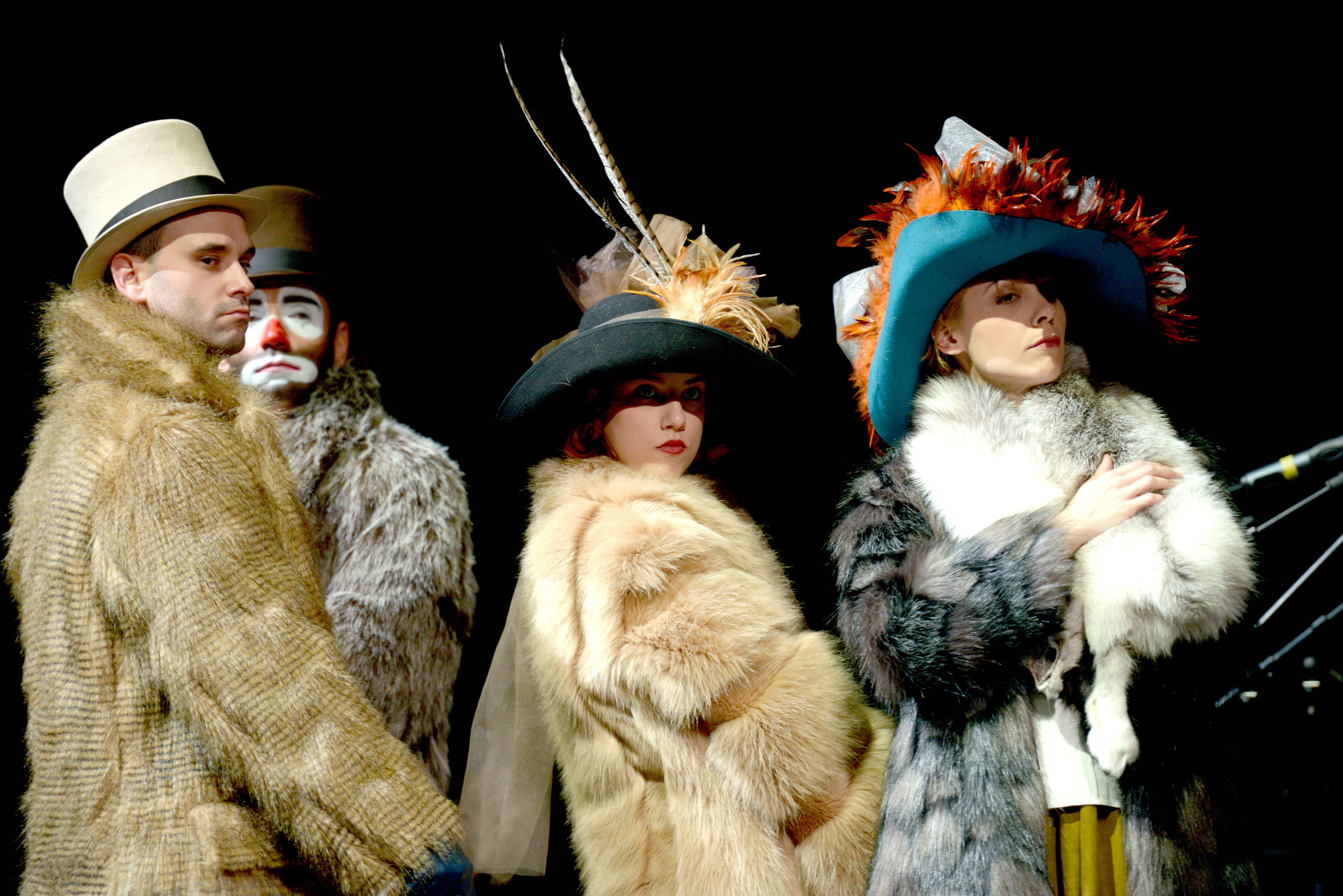
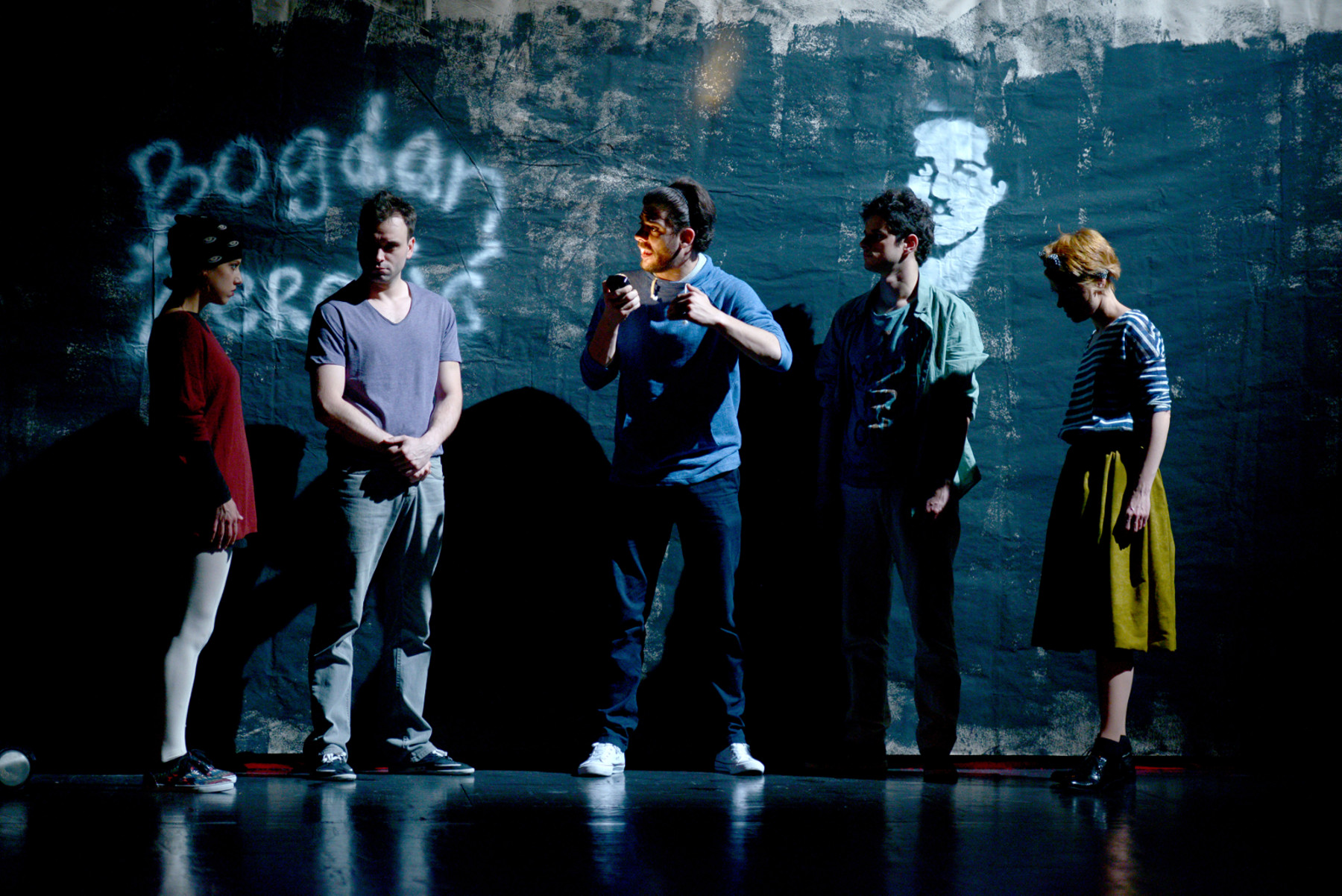
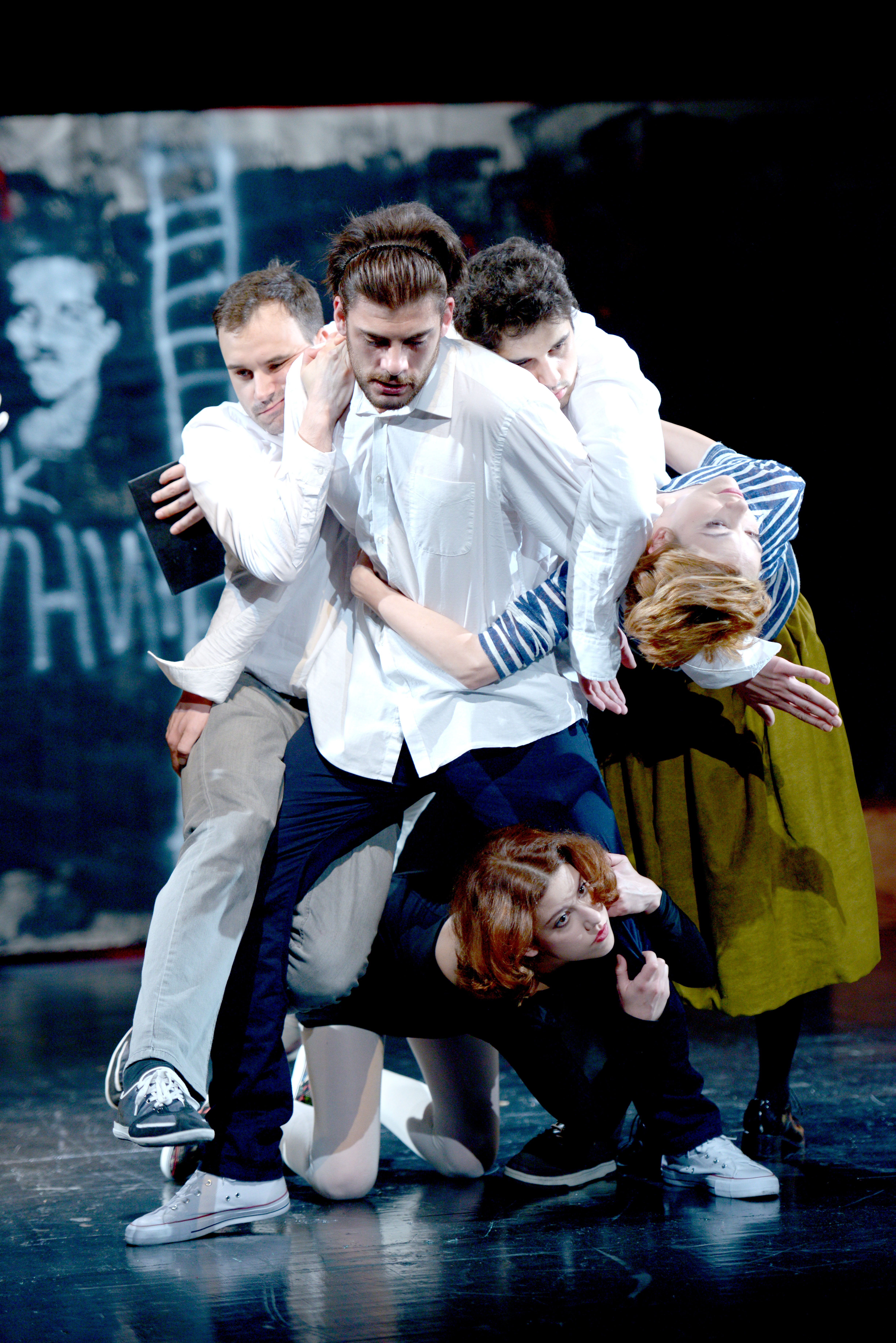
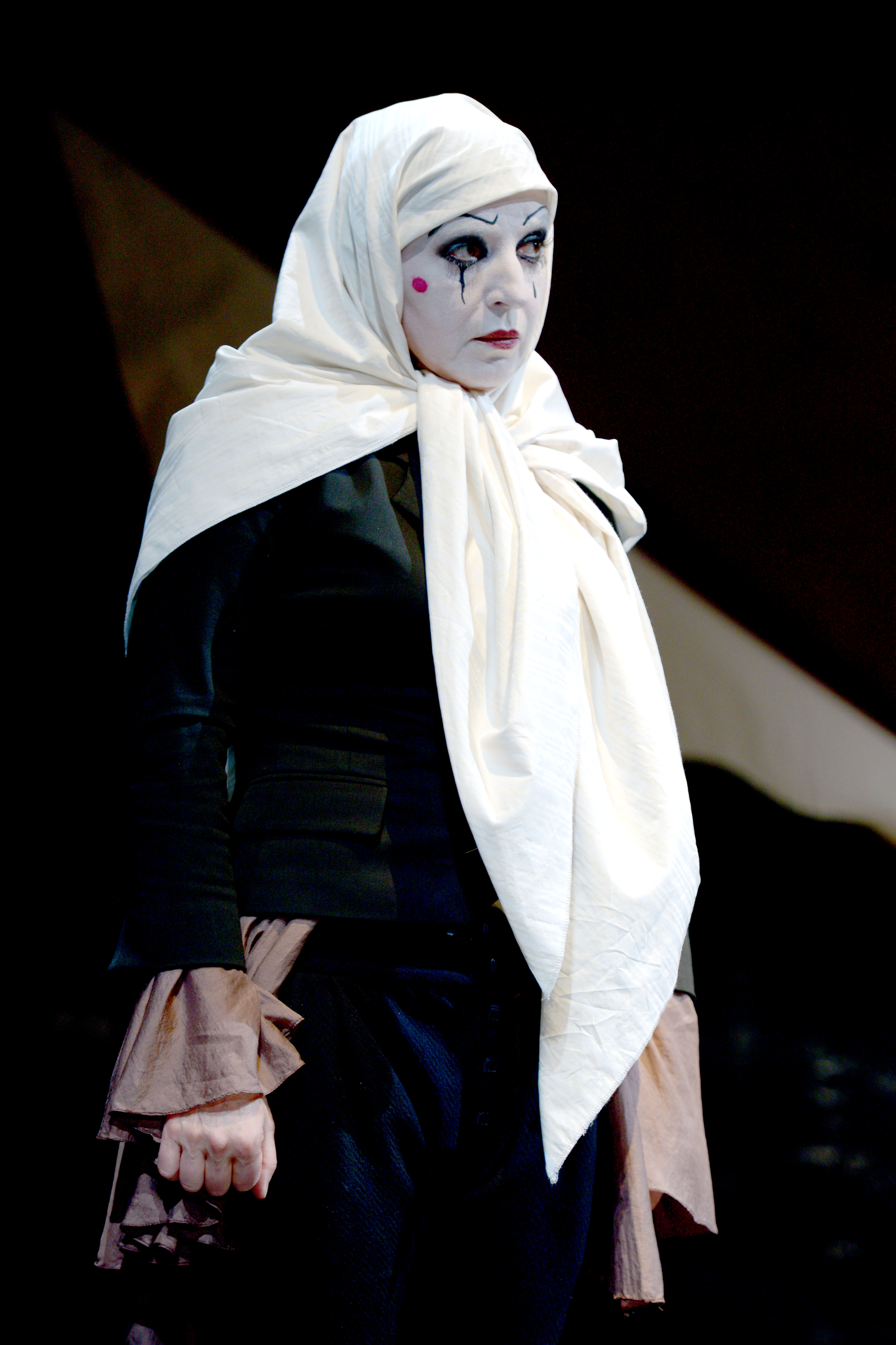
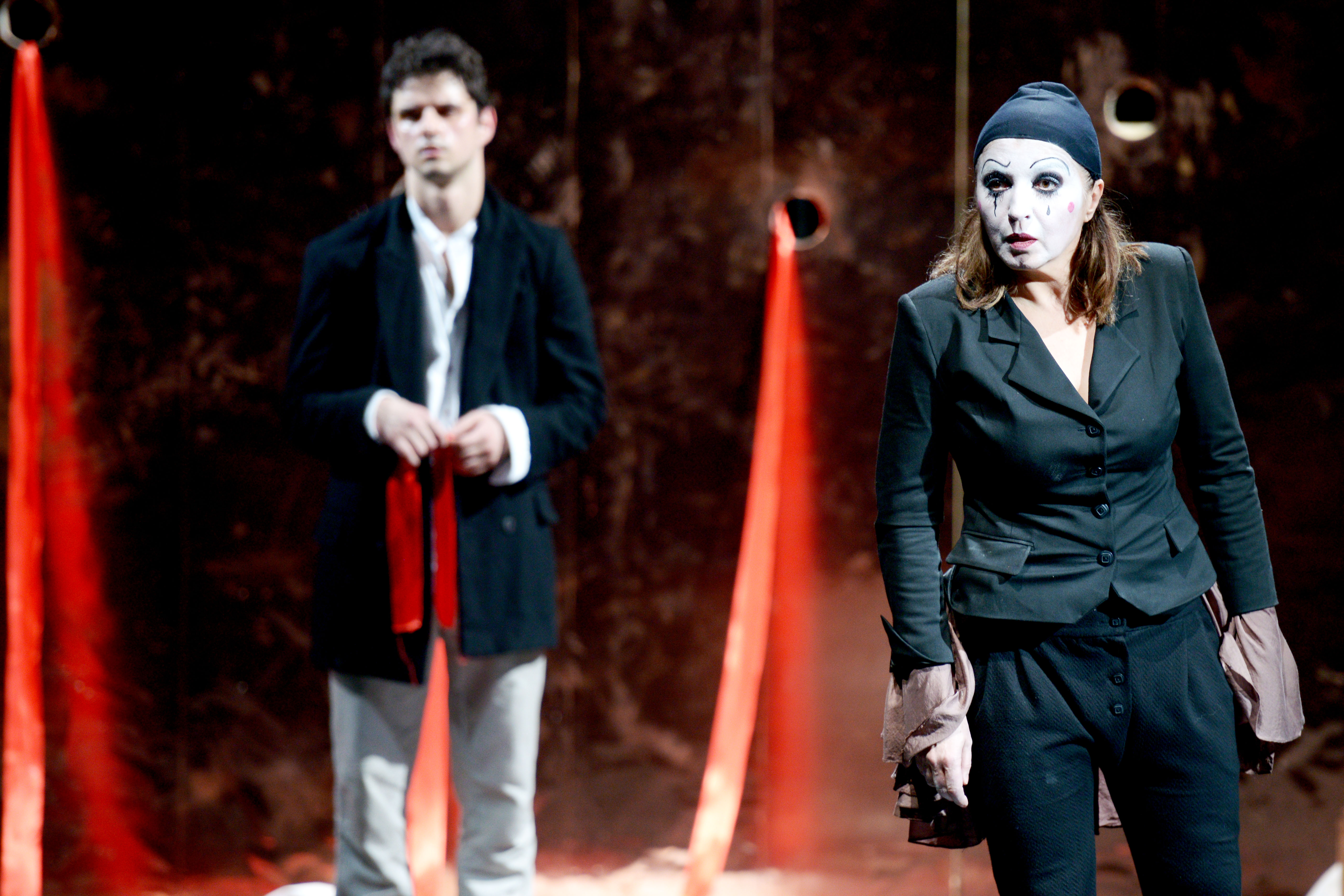
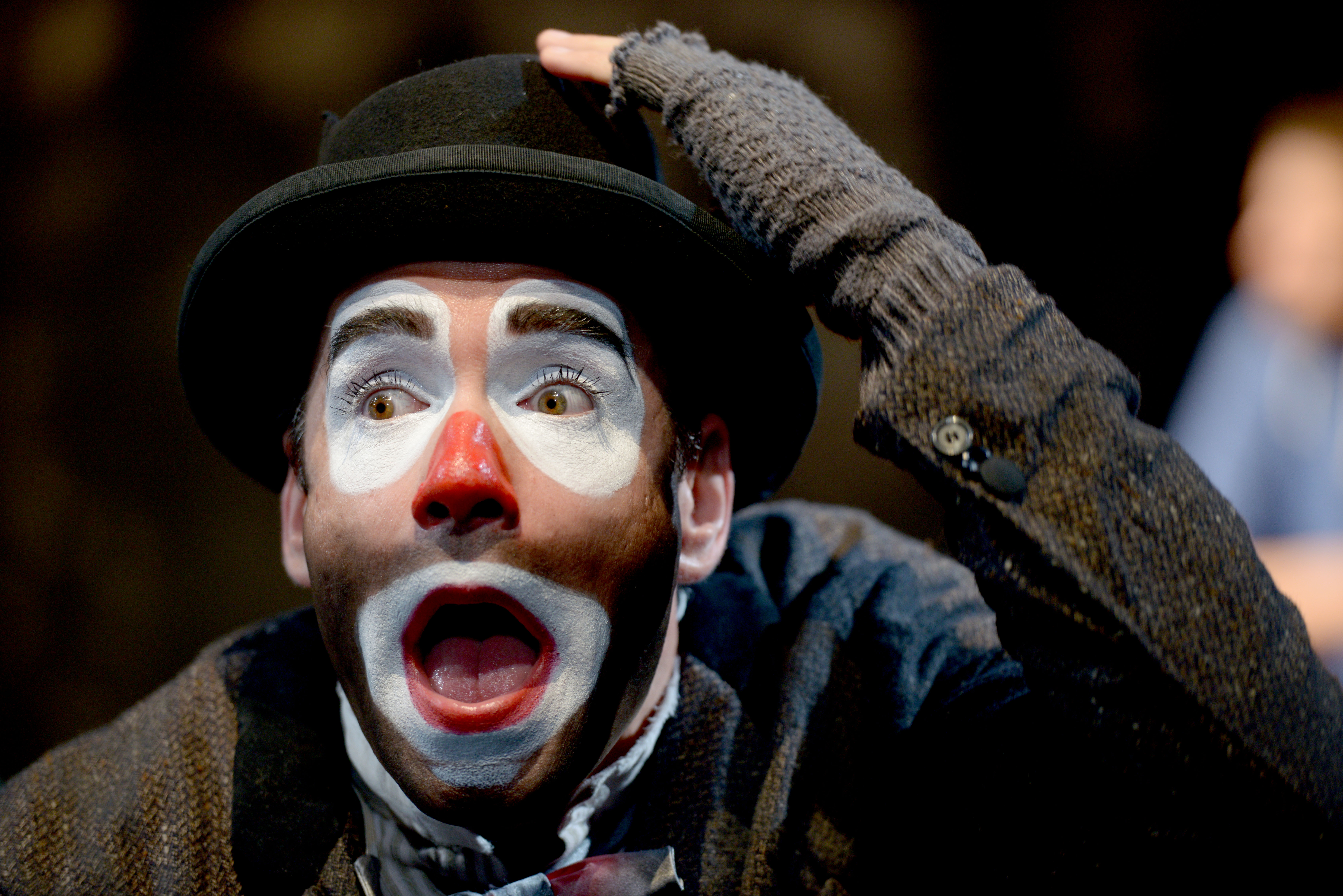
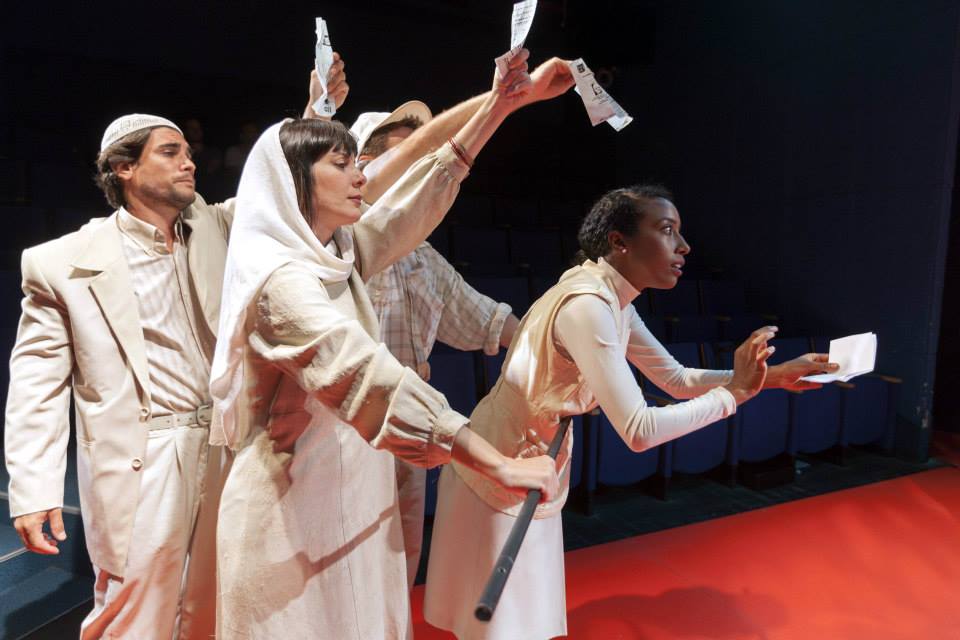
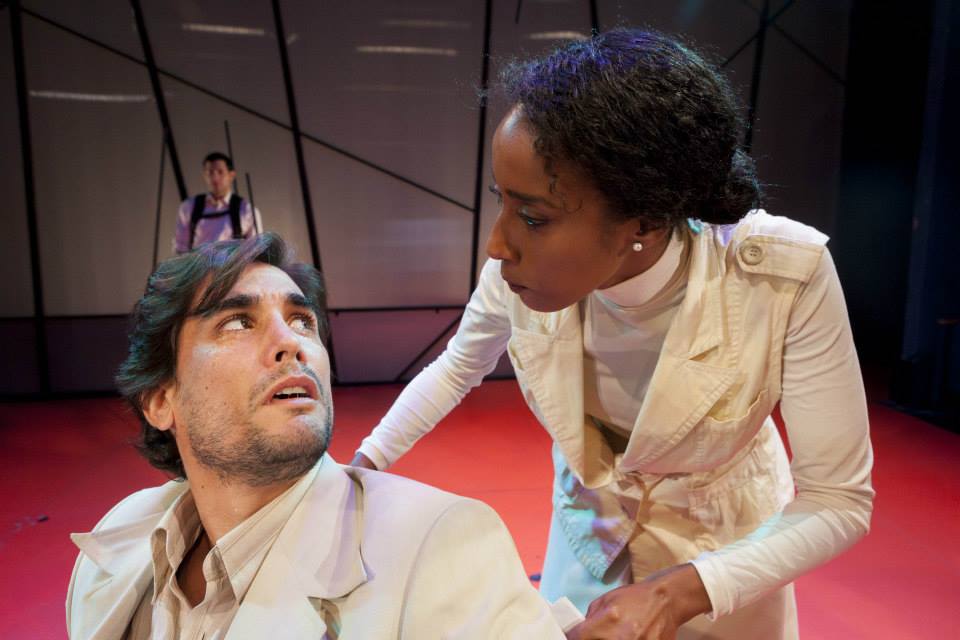
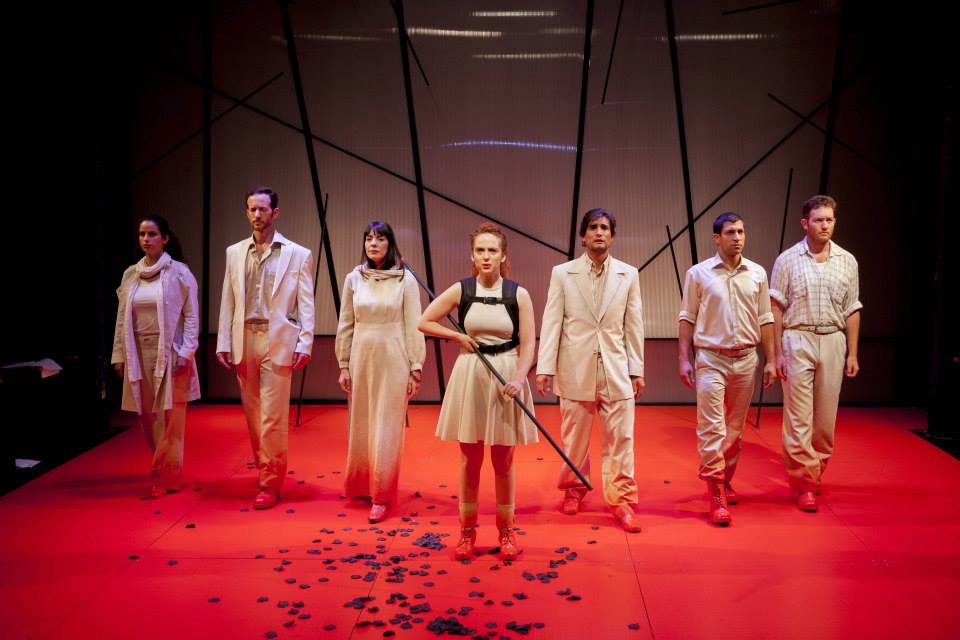
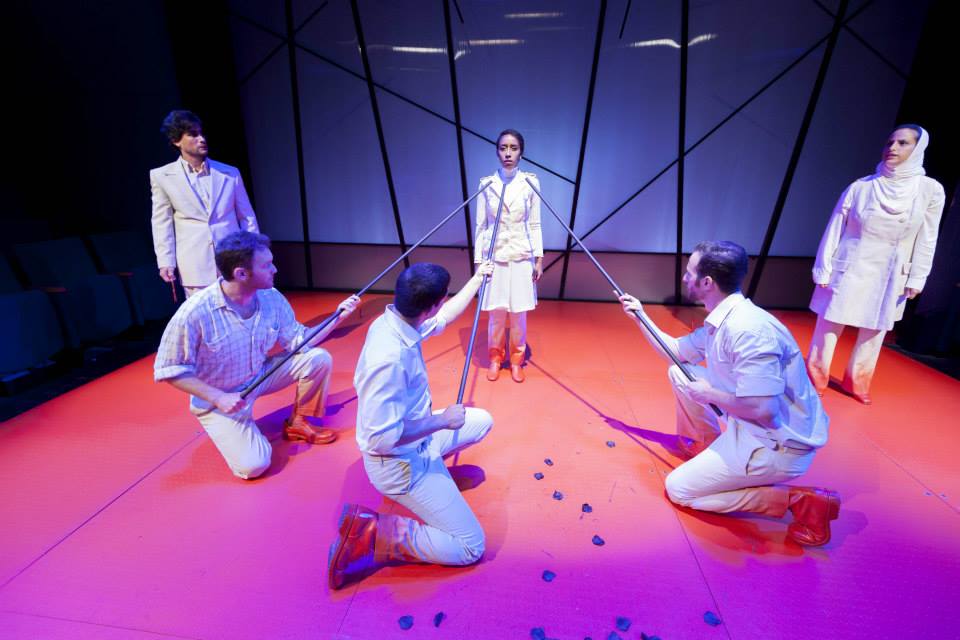
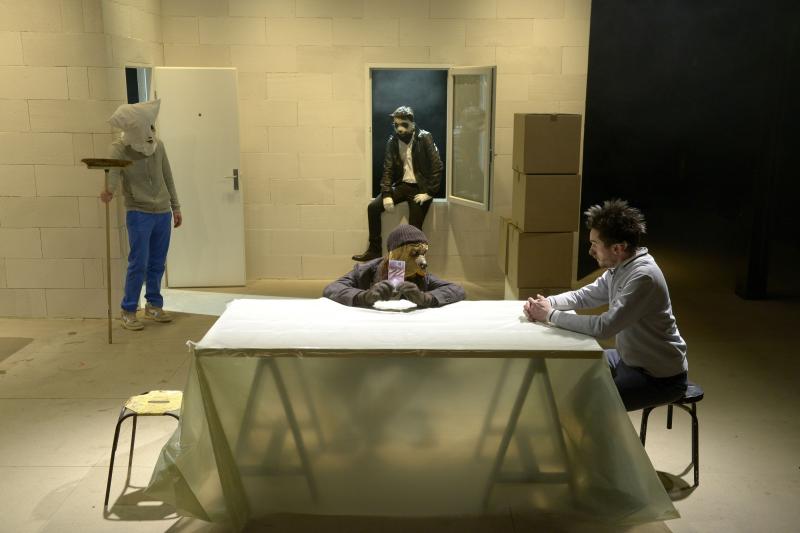
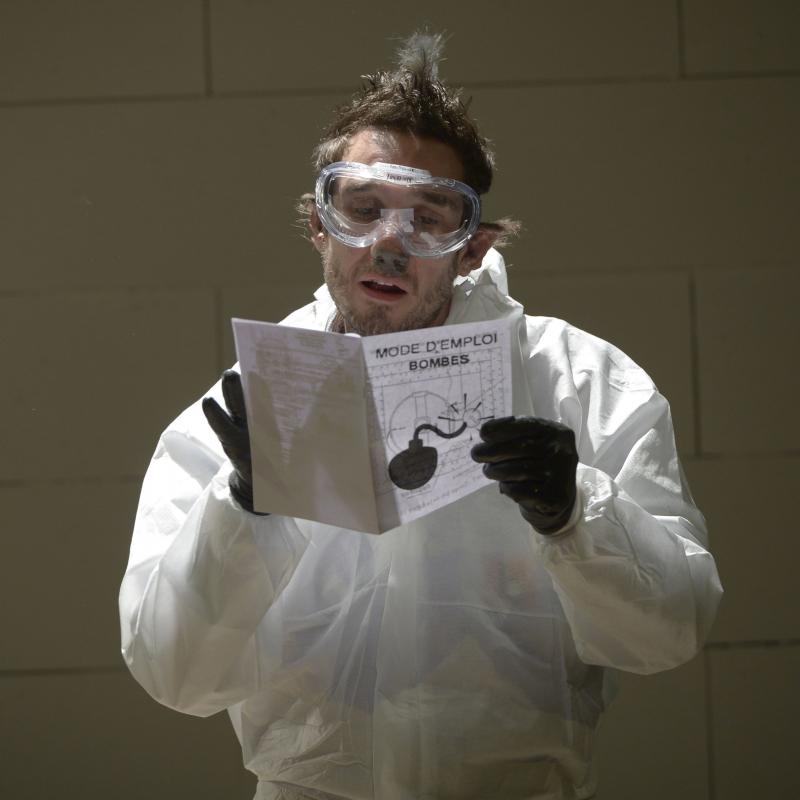
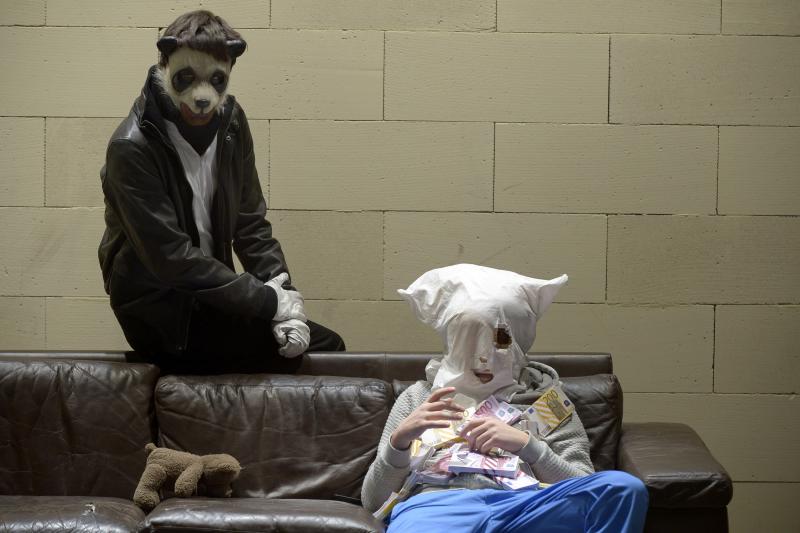
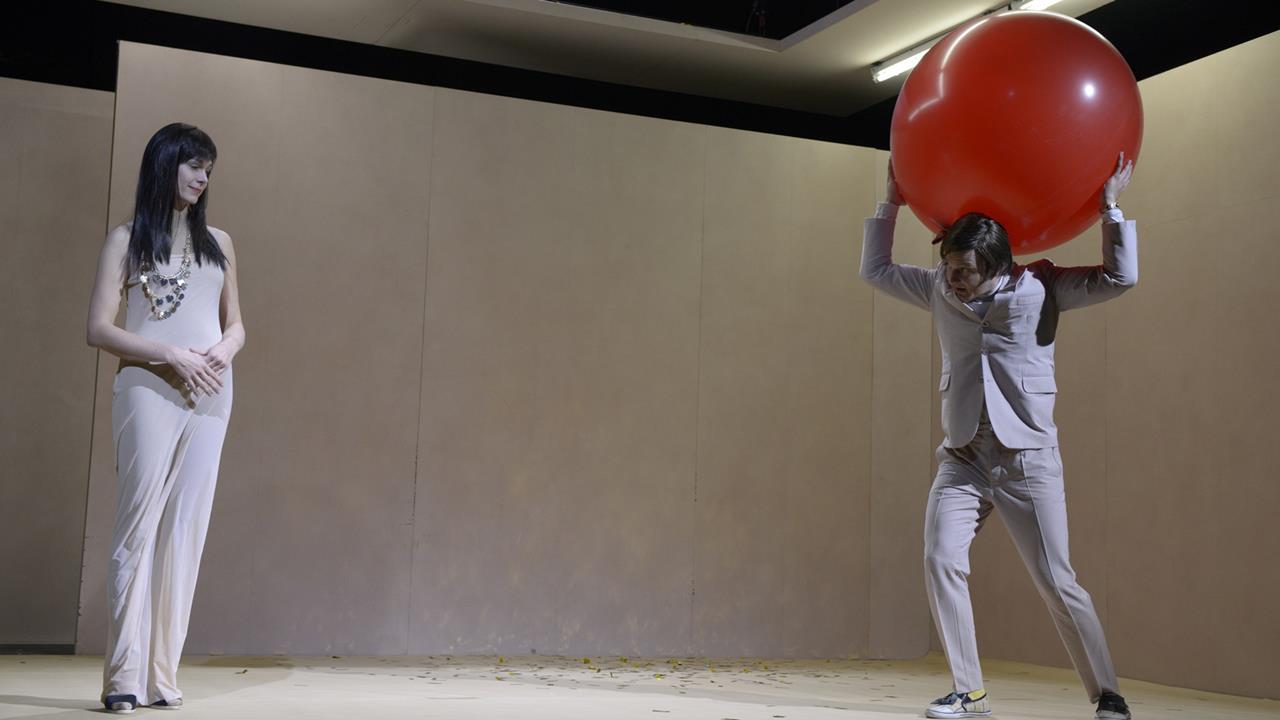
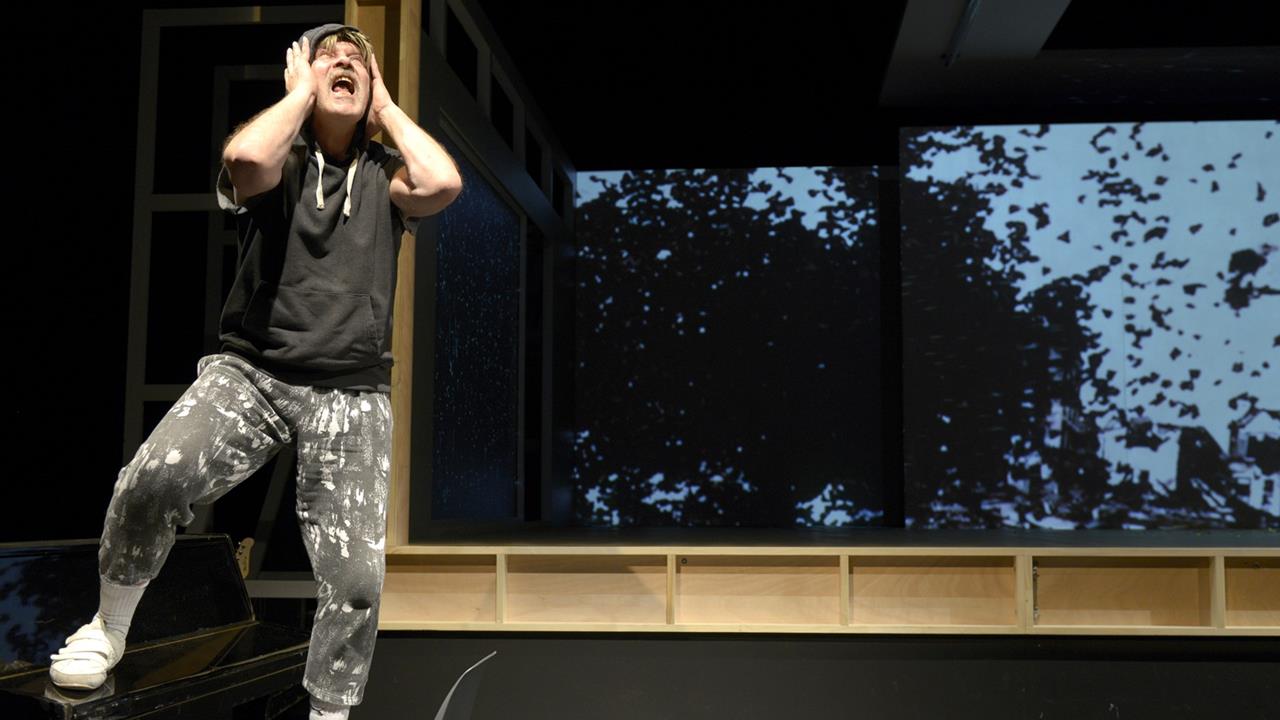
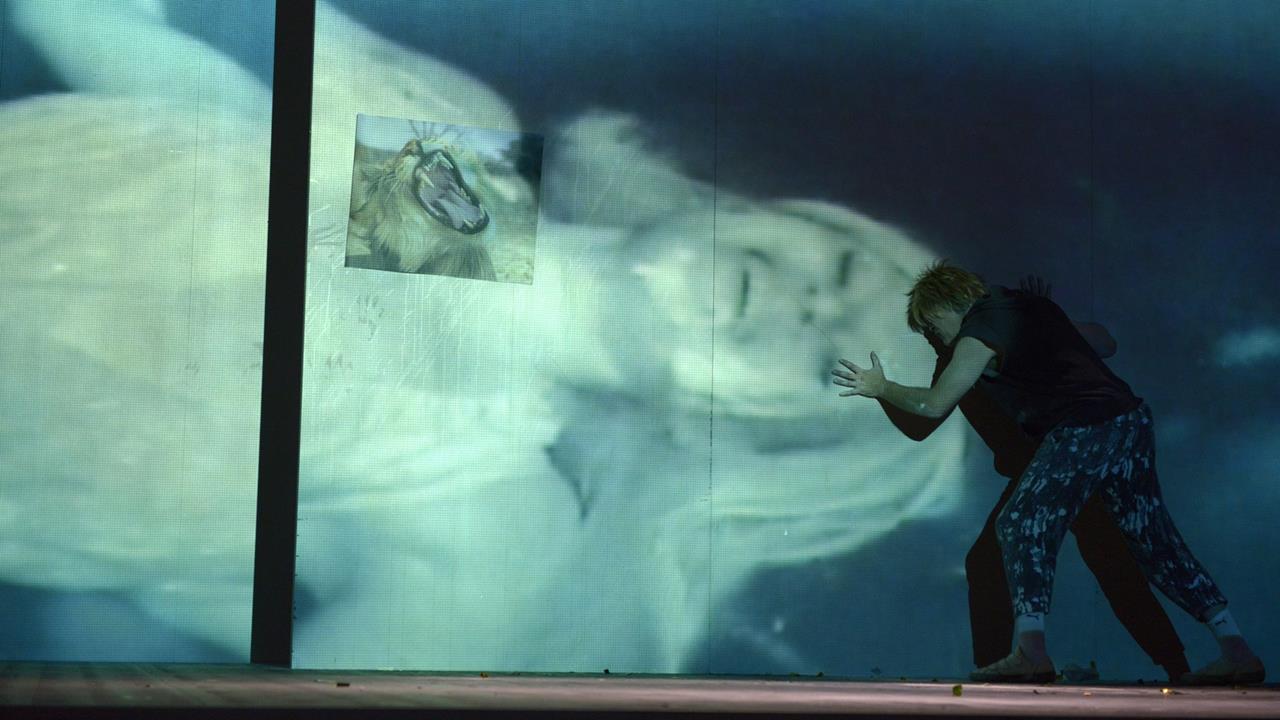
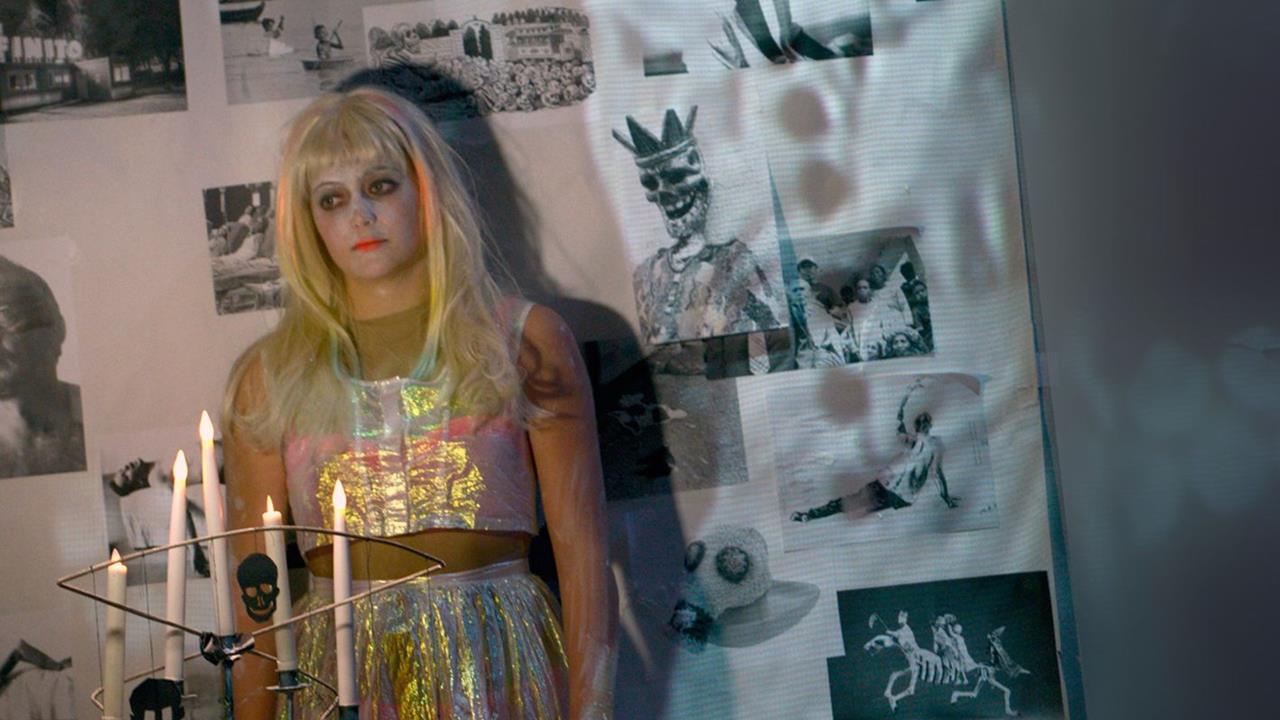
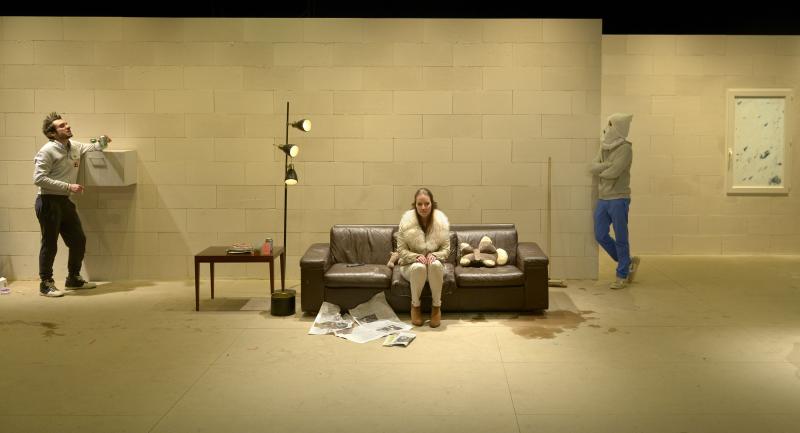
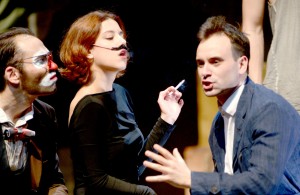
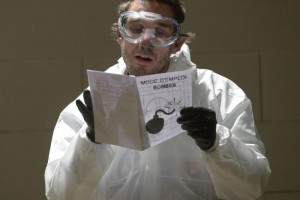
Grand and Petit are hopeless, futureless men. Everything spirals out of control when they decide to build a homemade bomb and attack a shoe factory. A few days after the explosion, a man, who has seen everything, is exalted and Groß and Klein become rich with the business of terror.
One after the other, people start showing up at their place to place orders. Grand and Petit try to meet their demands, though they have no ideology and no political awareness of the political meaning of their acts. Using an elliptic form, La Baraque (The Shack) displays a succession of rough sketches, in which nothing never gets too serious: a terribly efficient comical mechanism. An acid and ludicrous phantasmagoria, in which a couple of cranks almost unintentionally make a fortune by going into war business.
Aiat Fayez was born in 1979. He is an author and playwright from France, where he studied philosophy in Paris. In 2009, he published his first book — Cycles des manières de mourir. He left his home country in 2010 and settled in Austria, where he has devoted himself to writing novels and plays. His first play, Les corps étrangers, was published in 2011. A year later, he published his second novel Terre vaine. His third play, Un autre, was published in 2014, while his newest play, La Baraque, was published in 2015.
La Baraque
Written by Aiat Fayez Directed by Ludovic Lagarde
With Julien Allouf, Florence Janas, Alexandre Pallu, Tom Politano, Samuel Réhault, Julien Storini
Produced by the Comédie de Reims–CDN / Reims Scènes d’Europe
In the context of the TERRORisms project
Text published by the Arche Publishing House The English and German translation is published as an ebook by CulturBooks Download the English and German translation for free
Premiere on the 6 February 2015
Performing dates: 28 June 2015, 17:00 + 20:30
At the TERRORisms Festival, Schauspiel Stuttgart, Germany
Vi tygger på tidens knokler
We chew on the bones of time
Written and directed by Jonas Corell Petersen
In cooperation with the ensemble of the National Theatre of Oslo
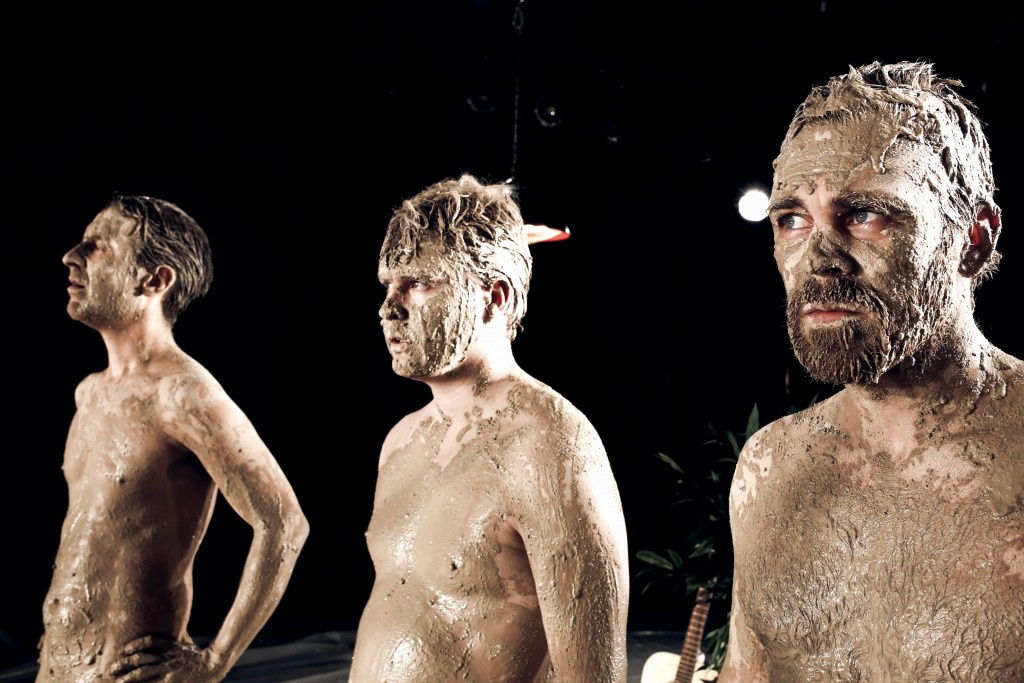
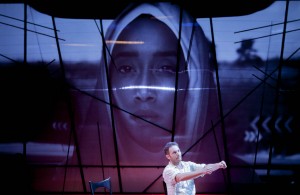
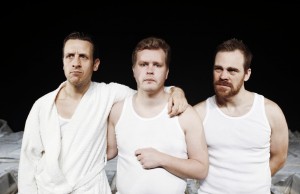
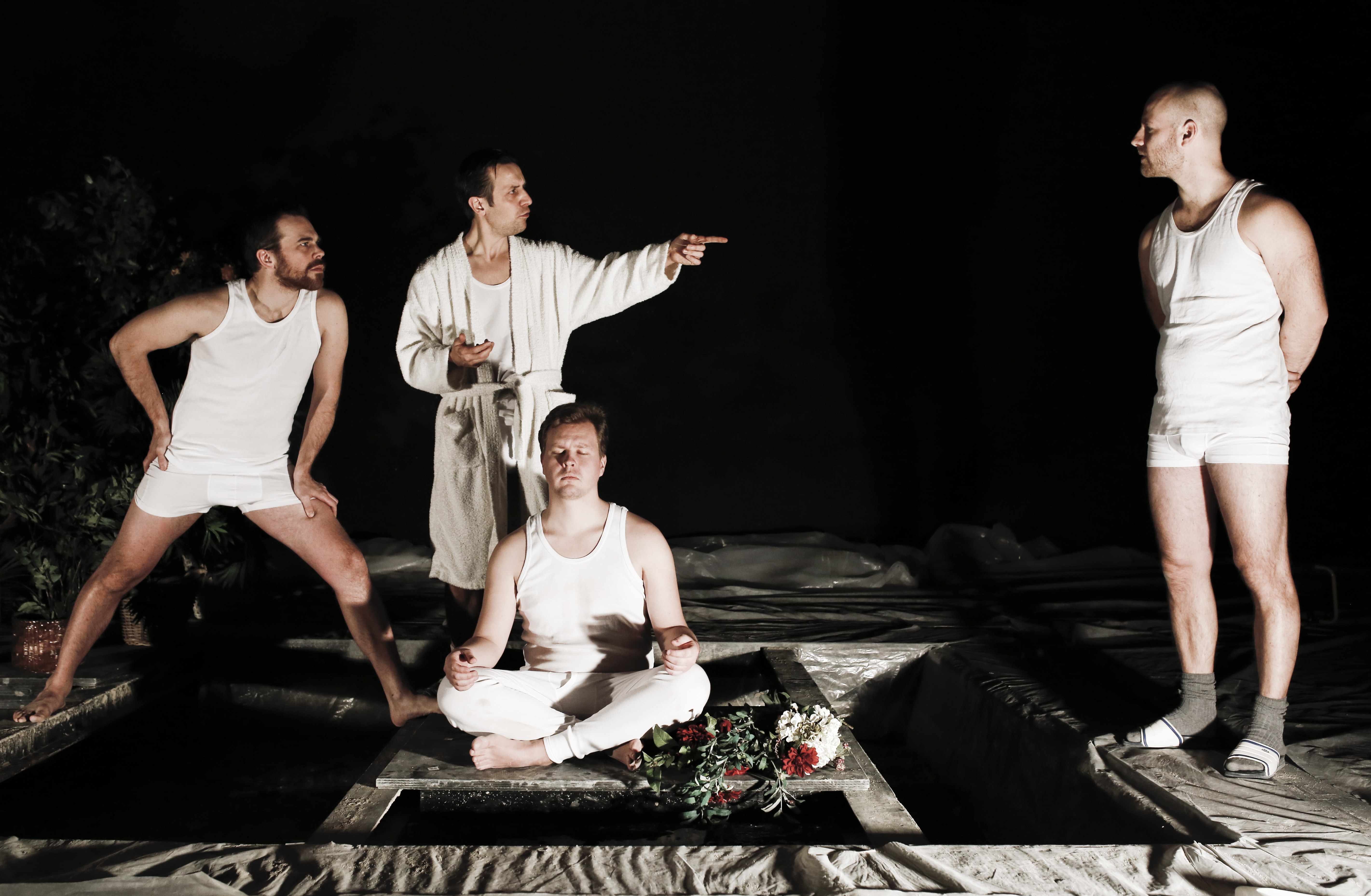
Photo by Marte Garmann. With: Ole Johan Skjelbred, Olav Waastad, Espen Alknes, Sigurd Myhre
In the old days, people could be happy. Before the nuclear family, the state and private property. Everyone knew one another, and everyone shared everything: Bacteria, skin diseases, lice, intestinal flora and cousins. You were always a part of a community. Either everyone were sick, and died all at once, or people fought the same battle against each other to survive on scarce resources. Language was not contaminated by foreign words. There was no crime, because there were no laws. Therefore, no one made boring TV shows about it. Nobody wasted time learning to read or going to school, because there was only one book, and someone read aloud from it on Sundays. All week people looked forward to hearing news about doomsday and the torture that could be expected in hell.
Four young people meet at a seminar that lasts for 40 days. They talk about human development over thousands of years, about the dark site of the human spirit in a cruel world – and about a glimmer of
hope?
During two hours of drama we meet people from history, near and distant, and become acquainted with the conditions they lived under. Is it really something to yearn for? Or should we rather be happy that we live here and now, despite the fact that violence, accidents and illness can strike us at any time? The director Jonas Corell Petersen is the one asking the questions. He will be one of four permanent directors at the National Theatre for the next four years. He has written this piece in collaboration with the ensemble.
Our life is a split second in history of the universe, but we are free to live a long and happy life. The only thing we know for sure is that death is waiting, and that is why we try to cram our lives with experiences. This is a paradox: The more packed our days become, the faster time seems to pass. We are chasing time, and suddenly death overtakes us.
Jonas Corell Petersen was born in Copenhagen in 1979, where he studied theatre theory and philosophy at the University of Copenhagen. He furthermore has a master’s degree in directing from the Norwegian Academy of the Arts. He has staged plays in Norway, Denmark, the Netherlands and Germany. Petersen won the European Fast Forward prize in 2011 for young directors. In 2013, he won the Hedda award for best performance for young audiences for the multilingual production Eg/Ik/I/Ich. At the moment, he is an in-house director at the National Theatre in Oslo, and resident playwright at the Norwegian Center for New Playwriting in 2016/2017.
We chew on the bones of time
Directed by Jonas Corell Petersen Written by Jonas Corell Petersen & Ensemble With Ole Johan Skjelbred, Olav Waastad, Ebsen Alknes, Sigurd Myhre
Dramaturg Olav Torbjørn Skare Stage & costume design Nina Damerell, Thale Kvam Olsen Music Gaute Tønder Lights Øyvind Wangensteen Make-up artist Wibke Schuler
In cooperation with the ensemble of the National Theatre of Oslo
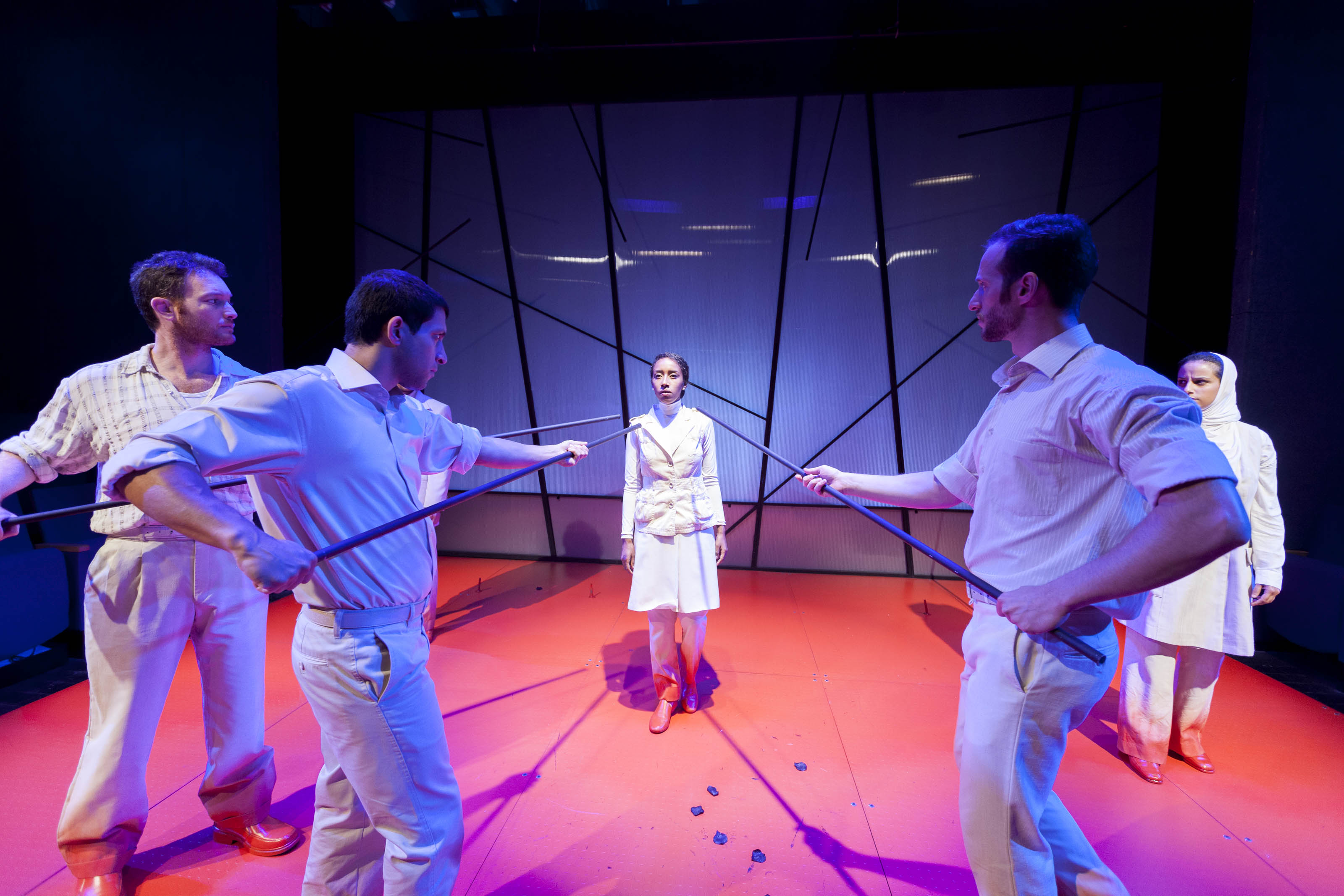
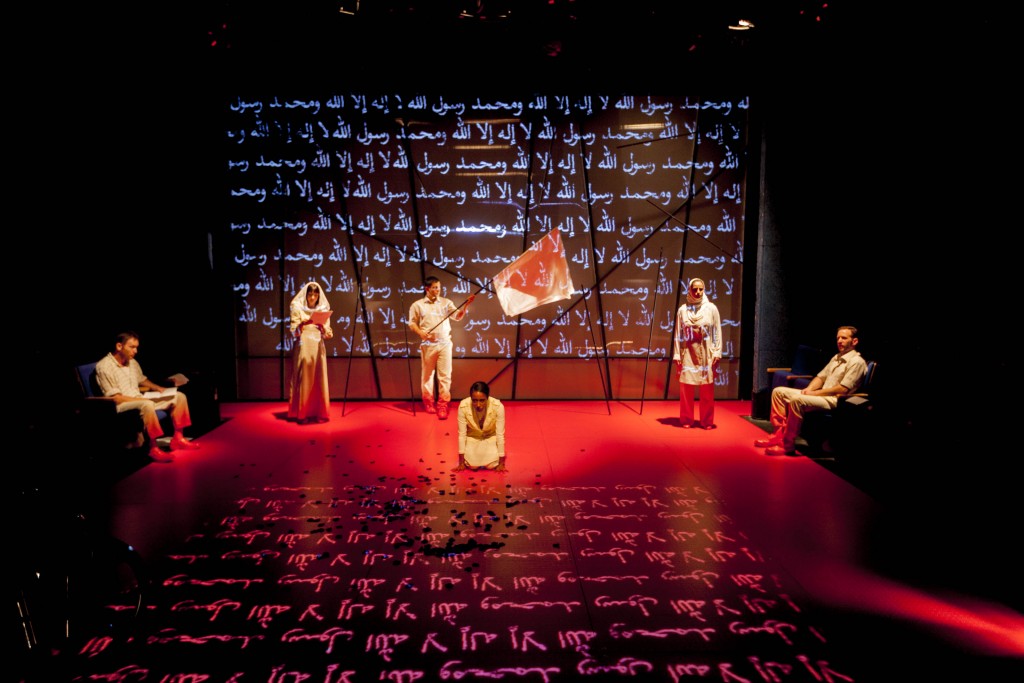
God Waits at the Station is a kaleidoscope of fragmented testimonies; one story bursts into another until a weave of broken realities and multiple truths unfold; an infinite cycle of victimization in which the line between victim and victimizer becomes blurry.
Who is the terrorist? A nurse who strayed from the path when her brother was killed by the enemy? An innocent girl who lost her lover when he was set up to marry another woman? A daughter to a father with cancer who was prevented from getting treatment on time due to the political reality?
“She was pregnant”, says the soldier who allowed the suicide bomber to pass through the checkpoint, thus enabling the death of thirty innocent people. “She was not pregnant”, determines the Israeli security agent who was present during the autopsy. Did the taxi driver who drove her become part of a terror attack against his will, or was he a knowing and calculated accomplice? And how do we end the cycle of death if even a pregnant woman is a possible suspect? The characters try to put together the shrapnels of life and death, connecting one piece to the other, but the image that is formed keeps falling apart during the moment of the Boom.
The point of departure of God Waits at the Station is one of the most devastating terror attacks that were performed within Israeli territory by Palestinian terror organizations during the second Intifada (2000-2005). Terror attacks, and mainly suicide bombings, were the central expressions of that violent uprising. Israel responded to these attacks with “targeted killings” of terrorists, which then led to additional attacks, forming an endless cycle of revenge: attack-retaliation-attack. The second Intifada tore apart the Oslo Accords (1993) and led to an escalation which damaged the Israeli and Palestinian economies and took the lives of soldiers and civilians on both sides.
Maya Arad, born in 1976, holds an M.A. in dramaturgy from the University of Amsterdam, where she graduated with distinction. She has been working as a production dramaturg in Europe and Israel, specializing in devised theatre and documentary theatre. As a playwright, her plays so far center on issues of identity, exile, and war. She won the first prize of the international playwriting competition of ITI–UNESCO in 2010 for her play The Diamond Stars, which has also been translated into Norwegian and German.
By Maya Arad Directed by Shay Pitowsky WithOshrat Ingedashet, Yuval Shlomovich, Naama Armon, Harel Morad, Shahar Raz, Oded Ehrlich, Naama Armon, Eleanor Flaxman, Lea Gelfenstein, Harel Morad, Shahar Raz, Harel Morad, Oded Ehrlich, Yuval Shlomovich, Eleanor Flaxman, Naama Armon
Dramaturgy by Einat Baranovsky With the Habima Young Actors Group
Set design Niv Manor Costumes Natasha Tuchman-Poliak Music Alberto Schwartz Movement Sharon Gal Video Nimrod Zin Lighting Ziv Volushin
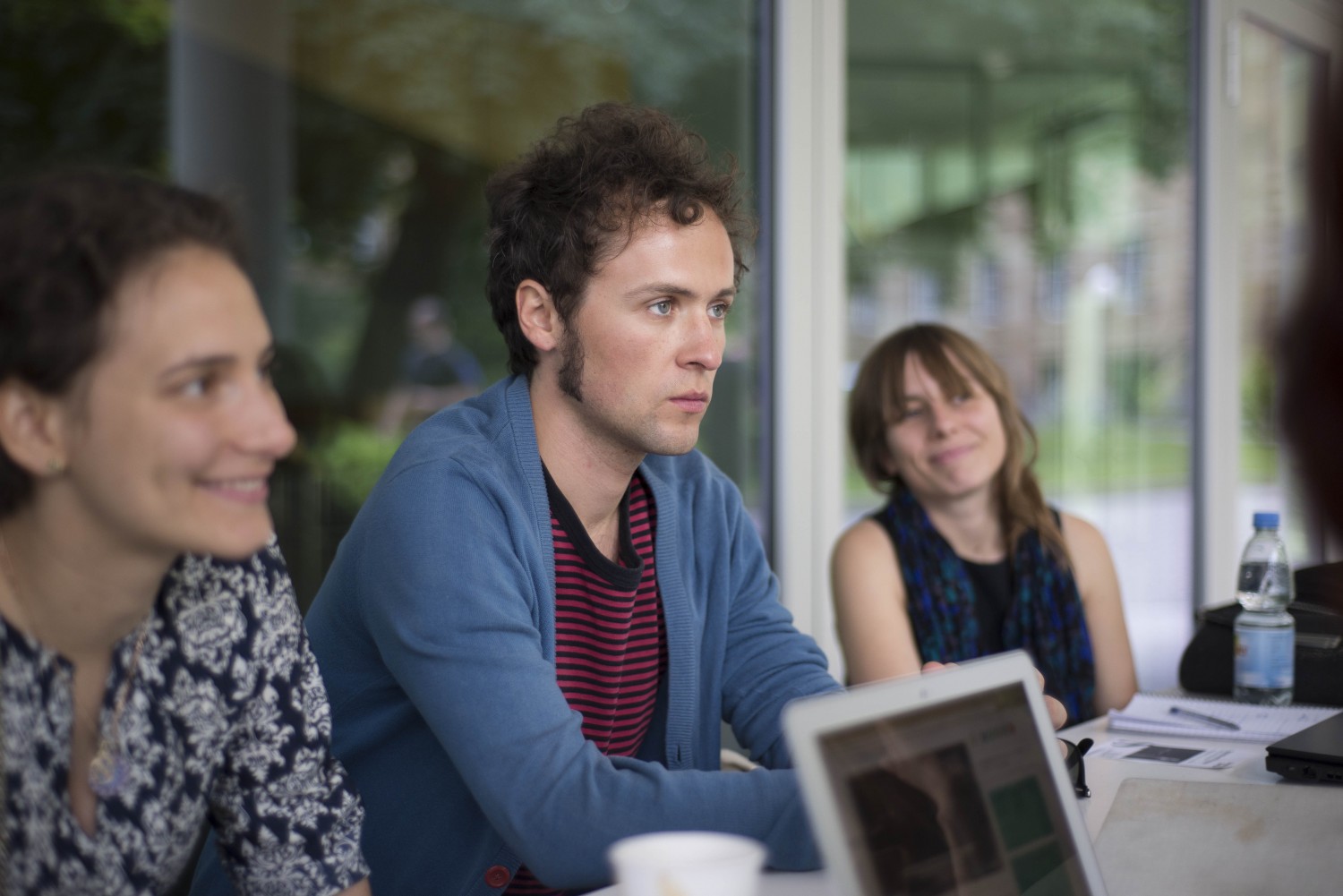
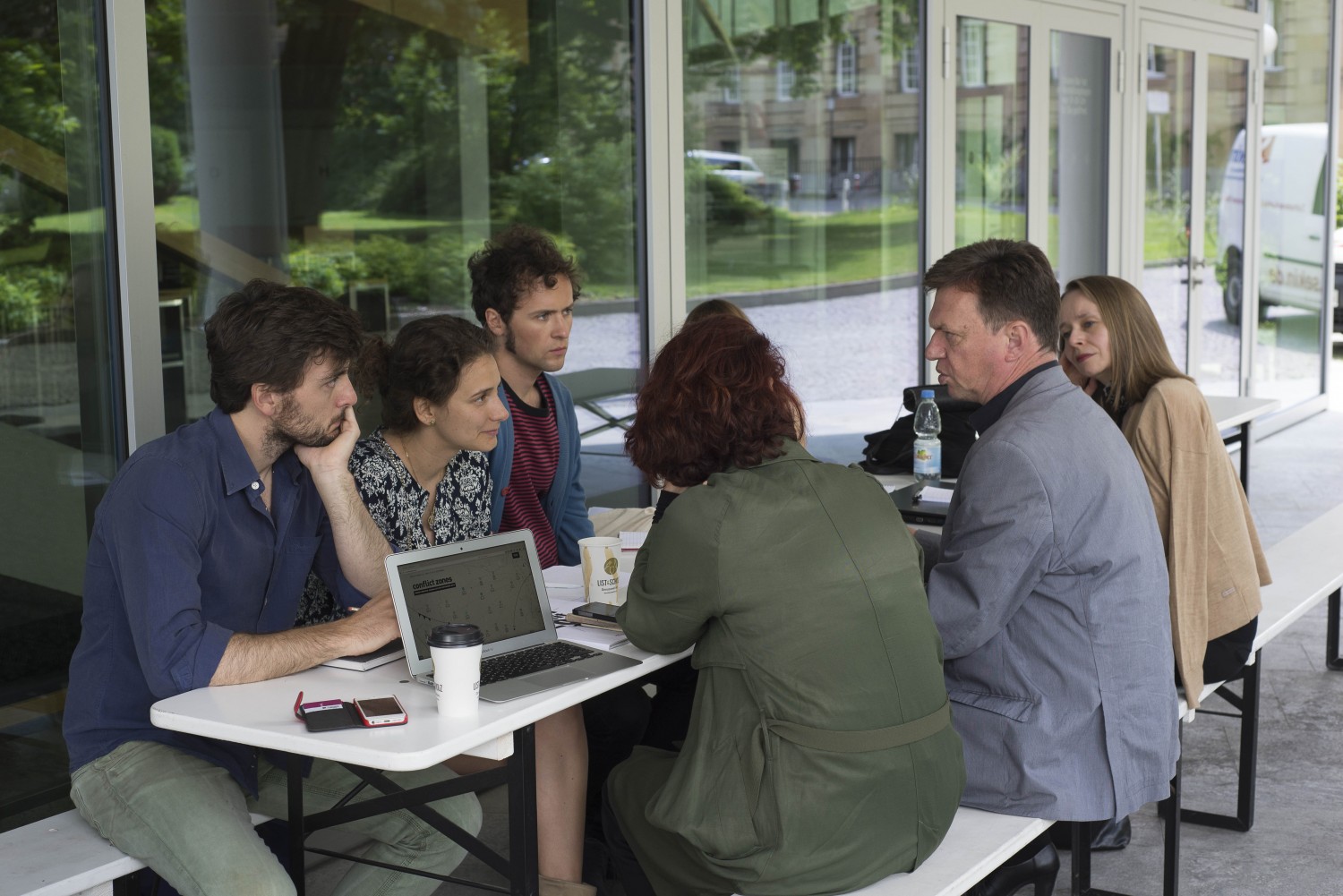
The Young Journalists in discussion with Ruth Heynen, Director of the U.T.E. and Karel Bartak, Director of the ‘Creative Europe’ programme of the European Union
In discussion with Karel Bartak, Director of the ‘Creative Europe’ programme of the European Union
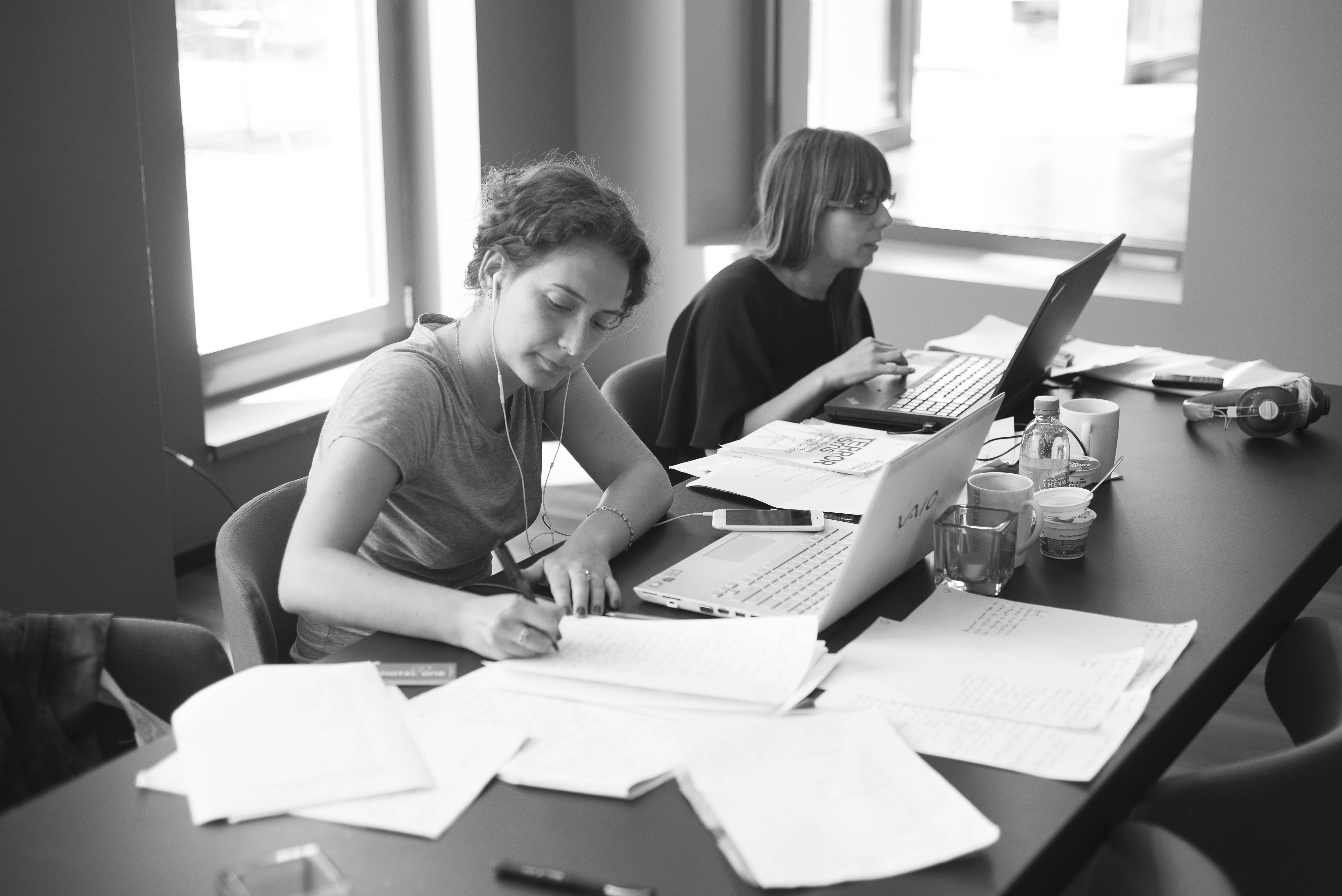
#day&night: @work
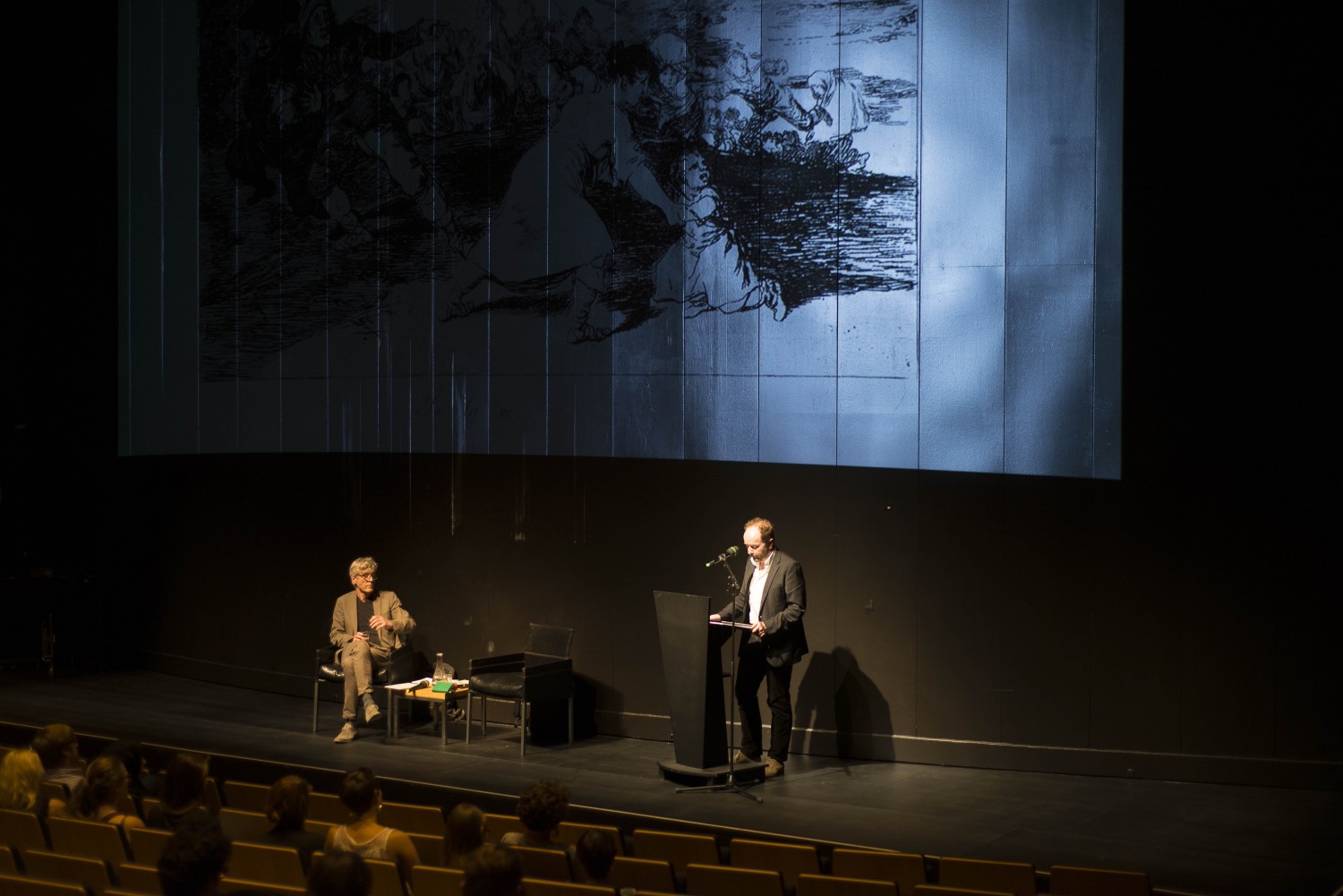
Terror and Theatre. Talk, with Reinhold Görling and Nikolaus Müller-Schöll. 25 June 2015
finding our way
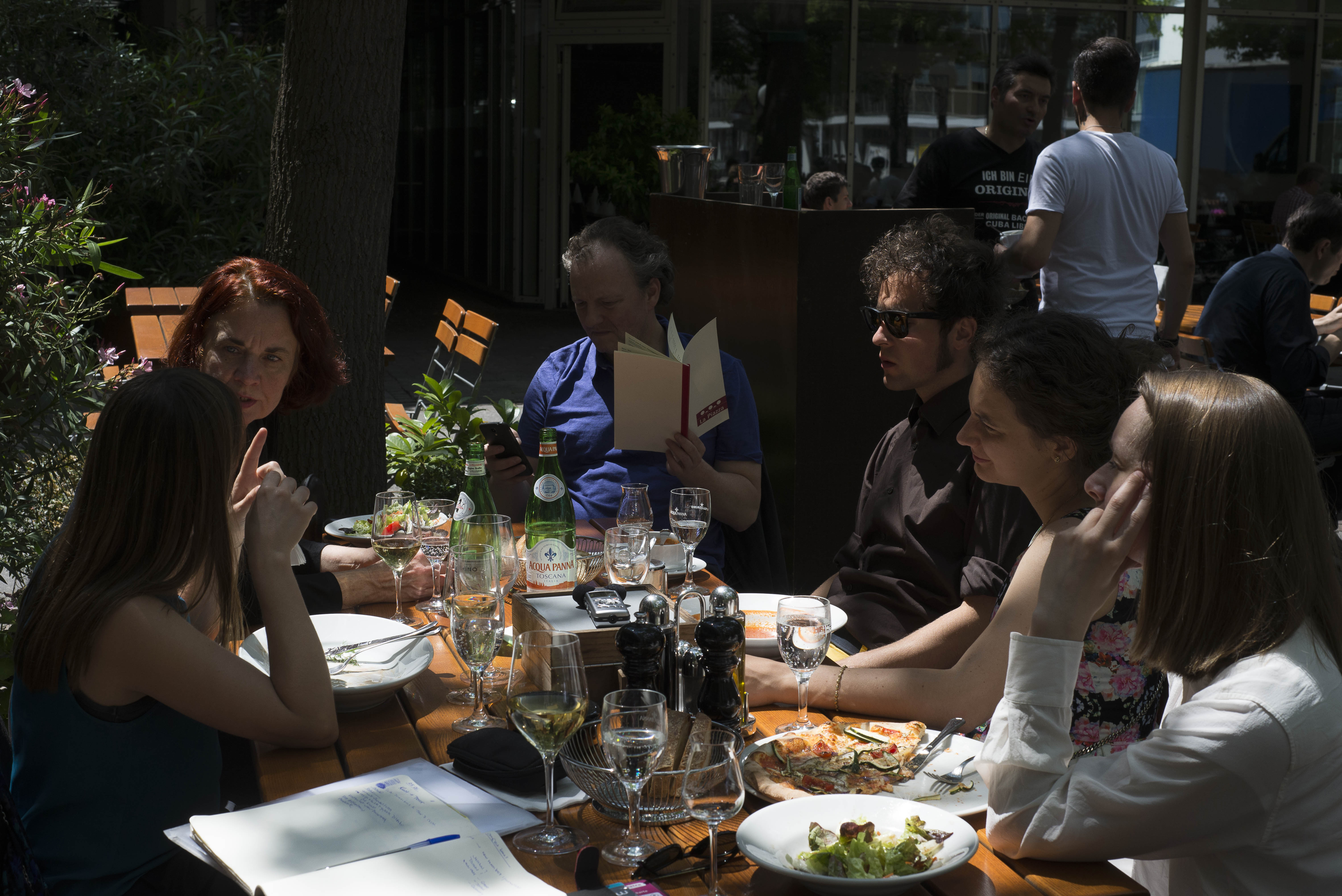
Meeting & lunch
Talking about: SERBIA. With Jürgen Berger (Moderation)
The Schauspiel Stuttgart
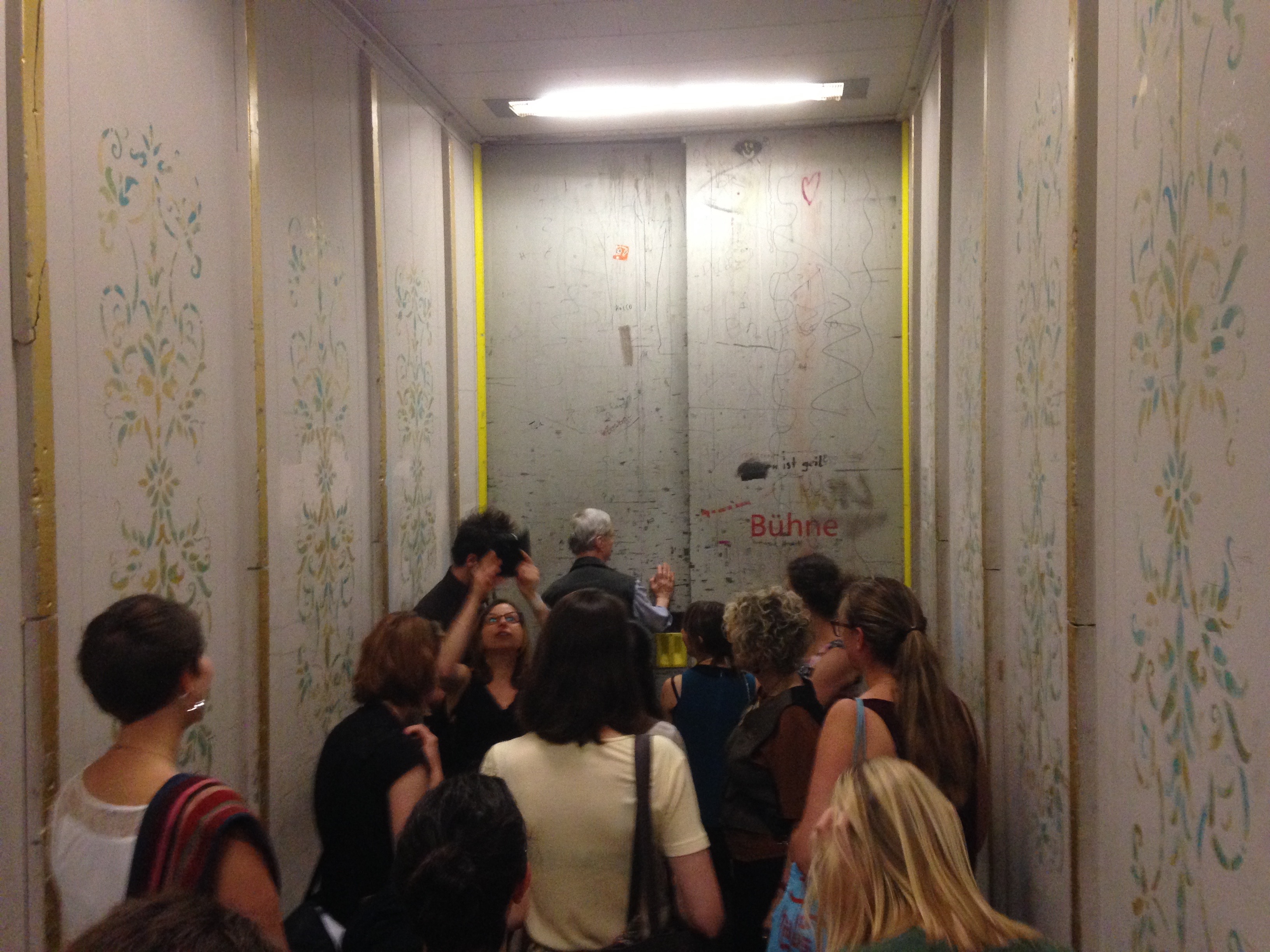
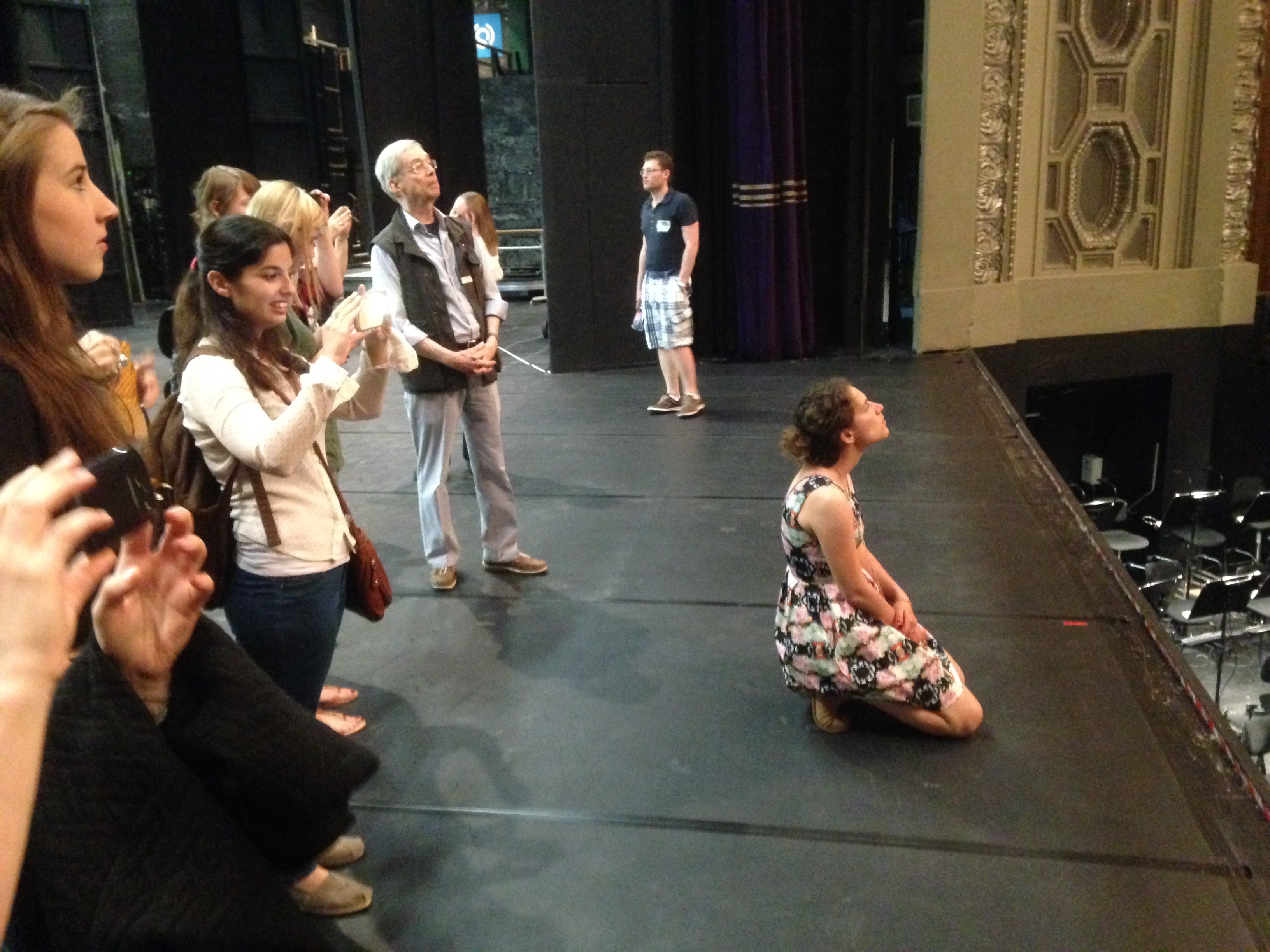
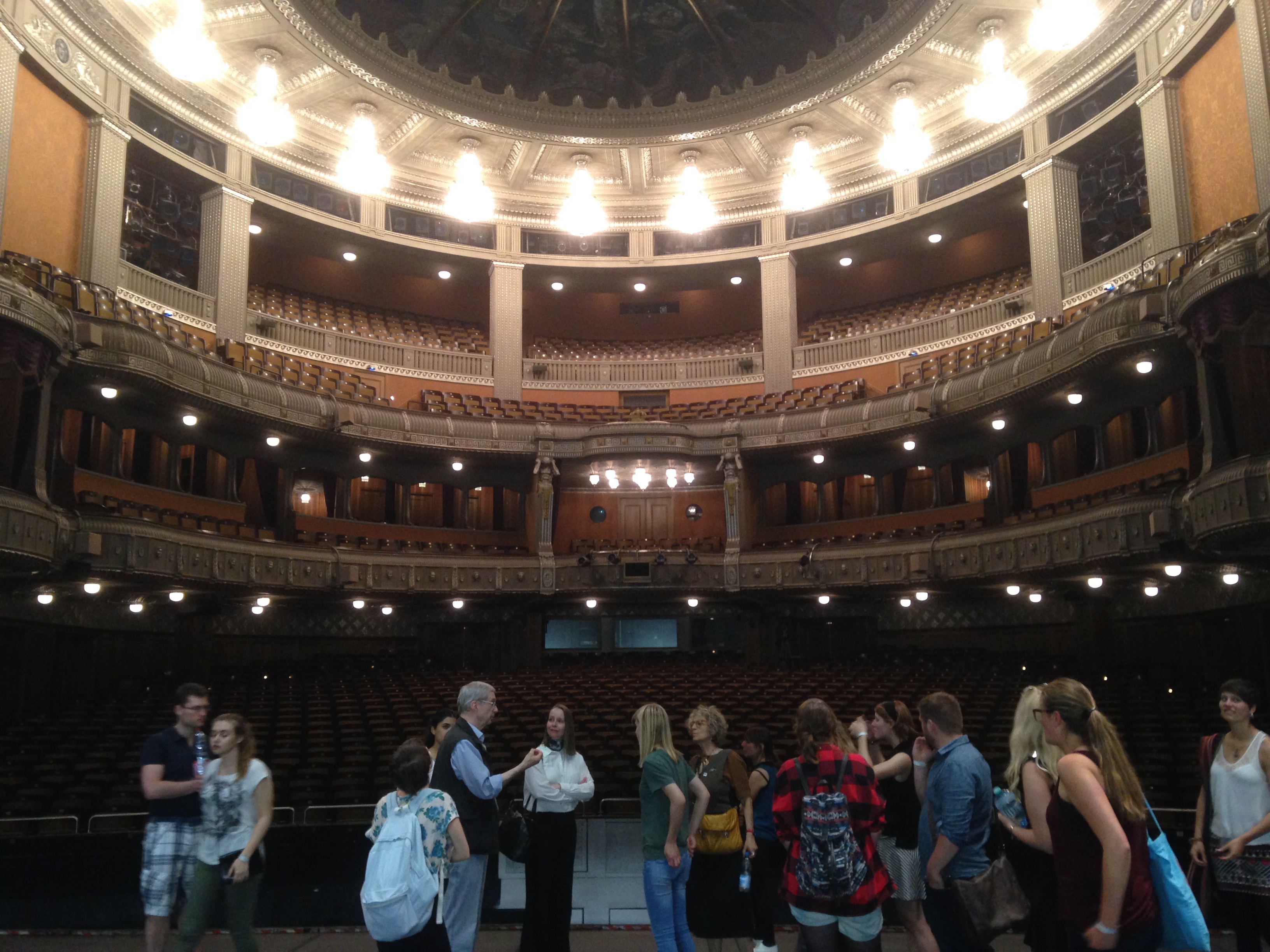
During a guided tour of the Staatstheater Stuttgart
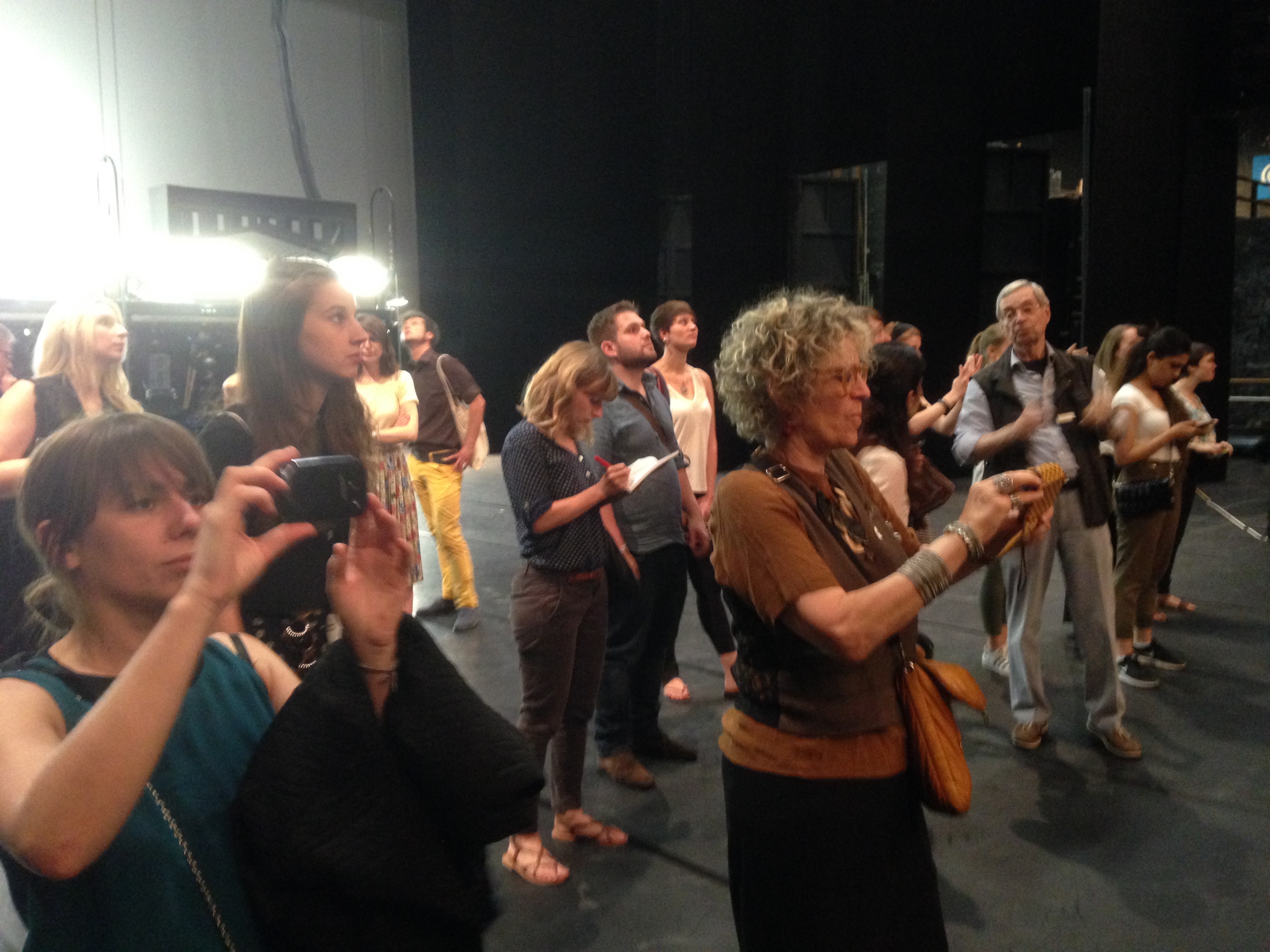
During a guided tour of the Staatstheater Stuttgart- at the opera house
Talking about: ISRAEL. Moderation: Jürgen Berger
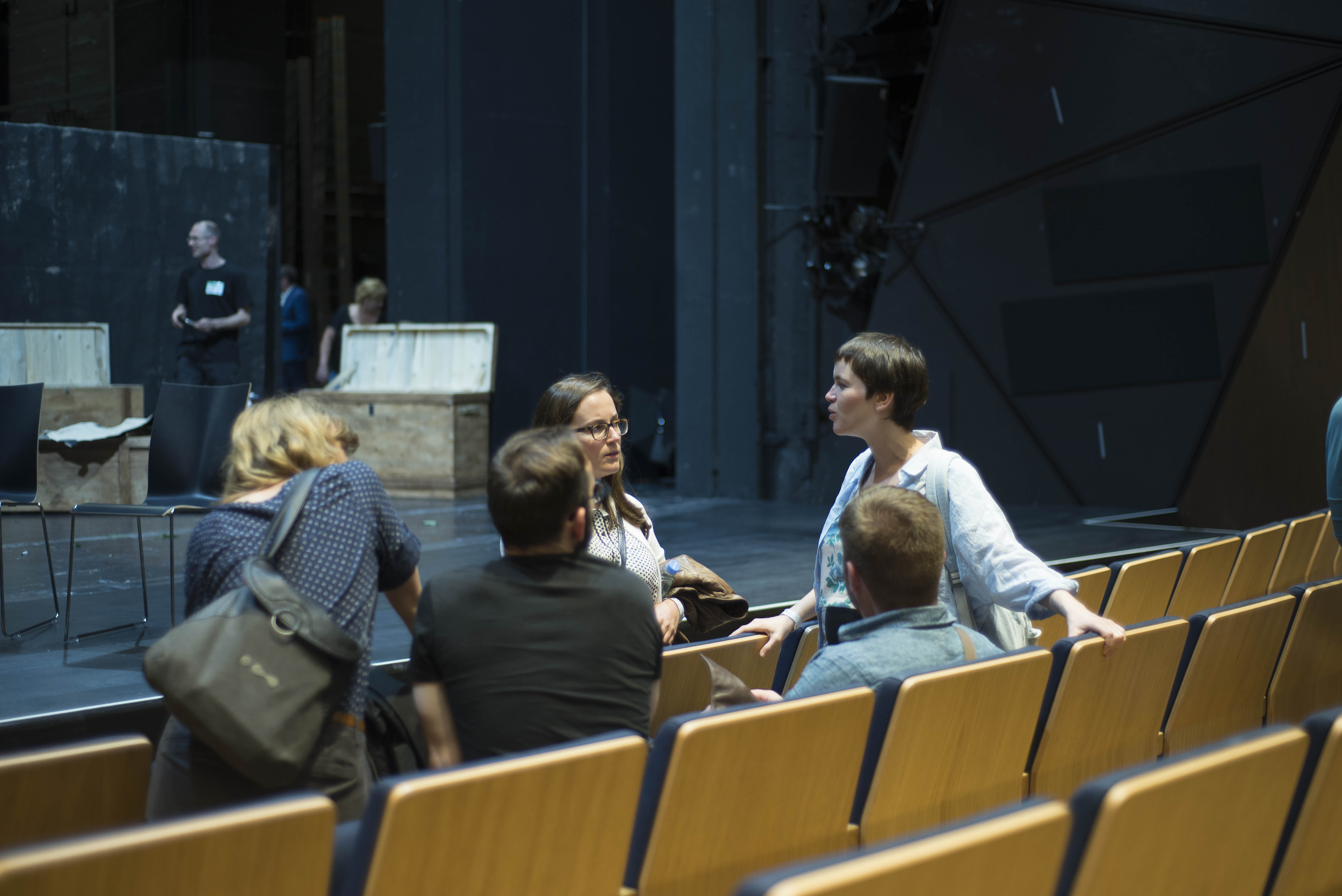
Discussion after discussion
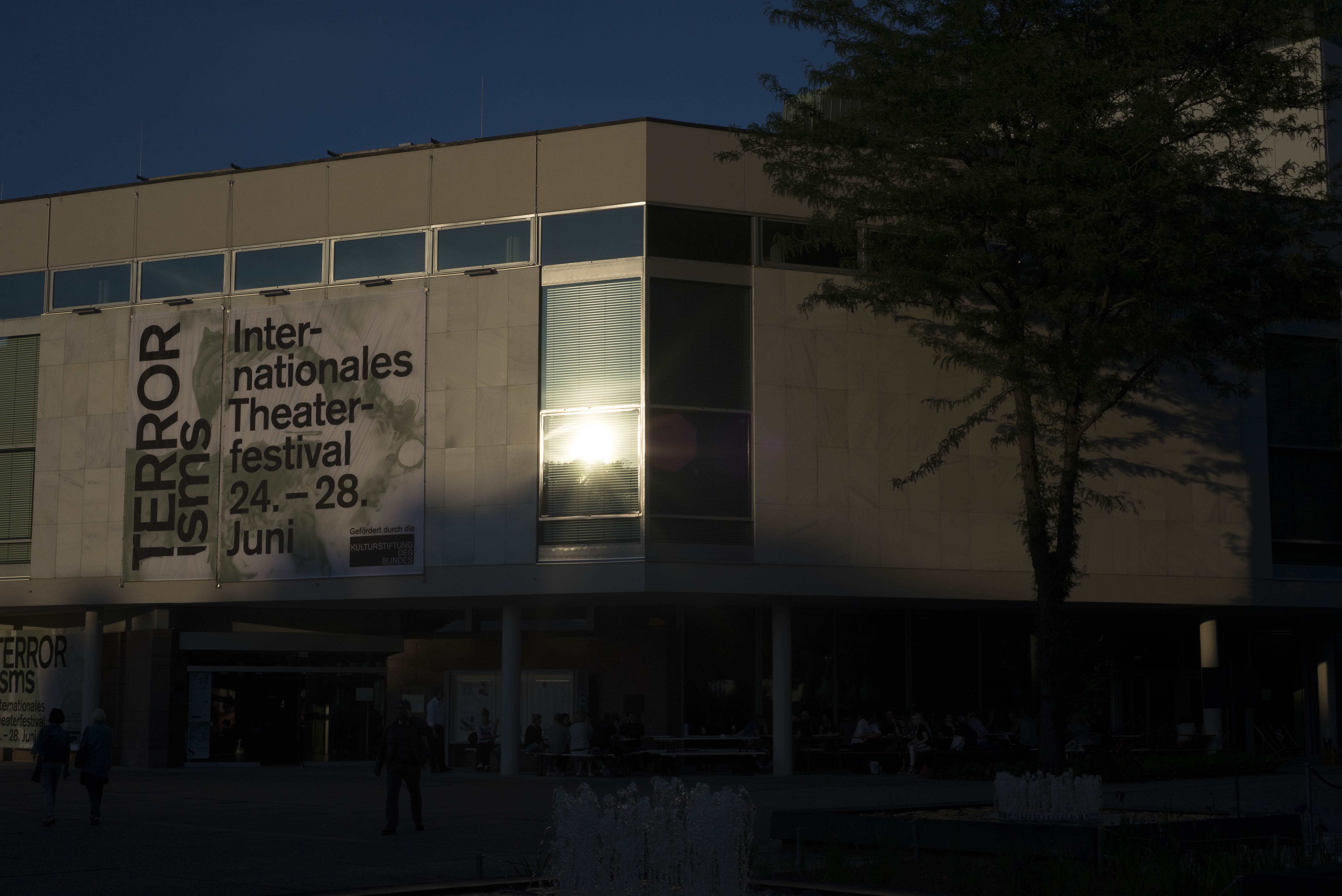
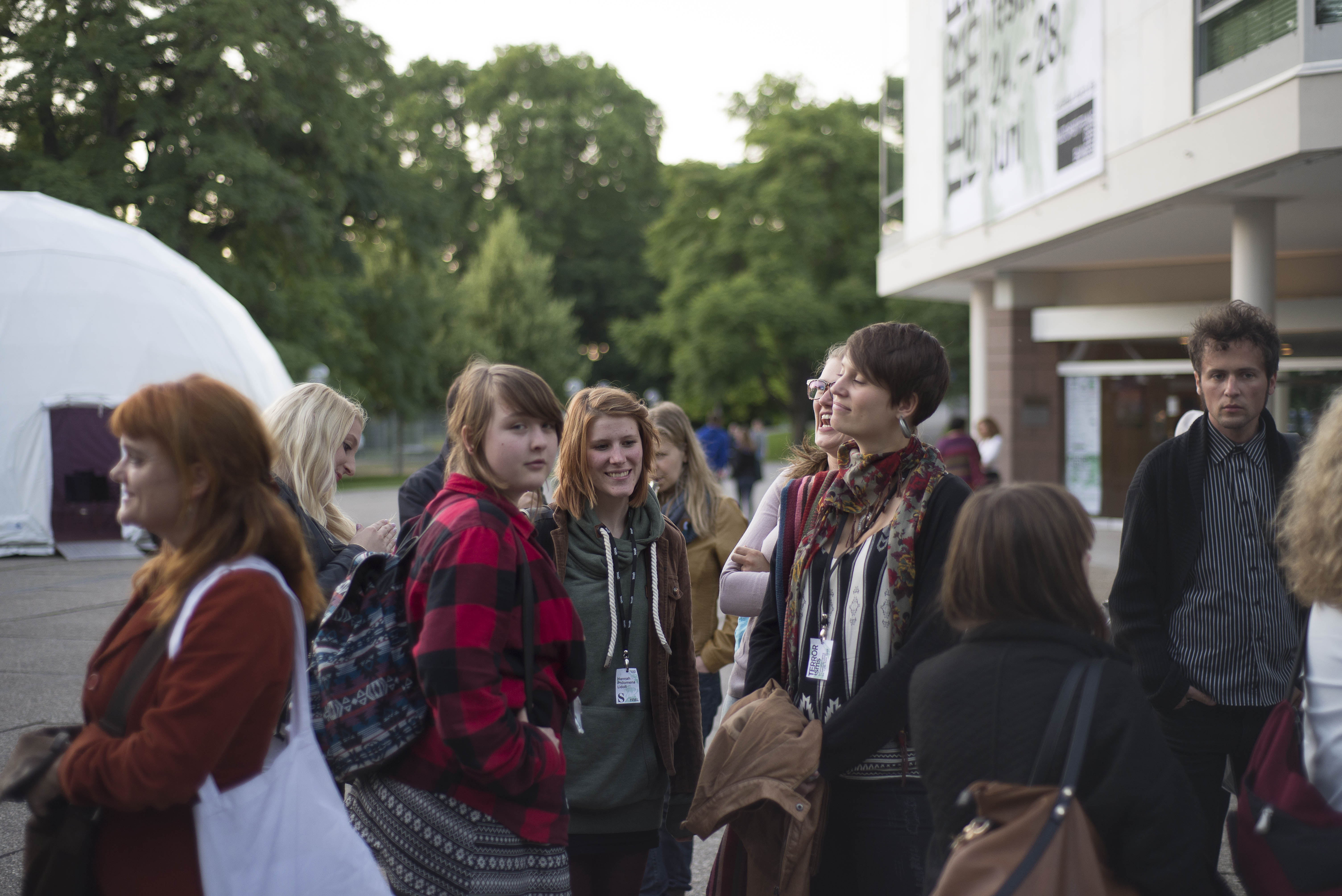
In front of the Schauspiel Stuttgart
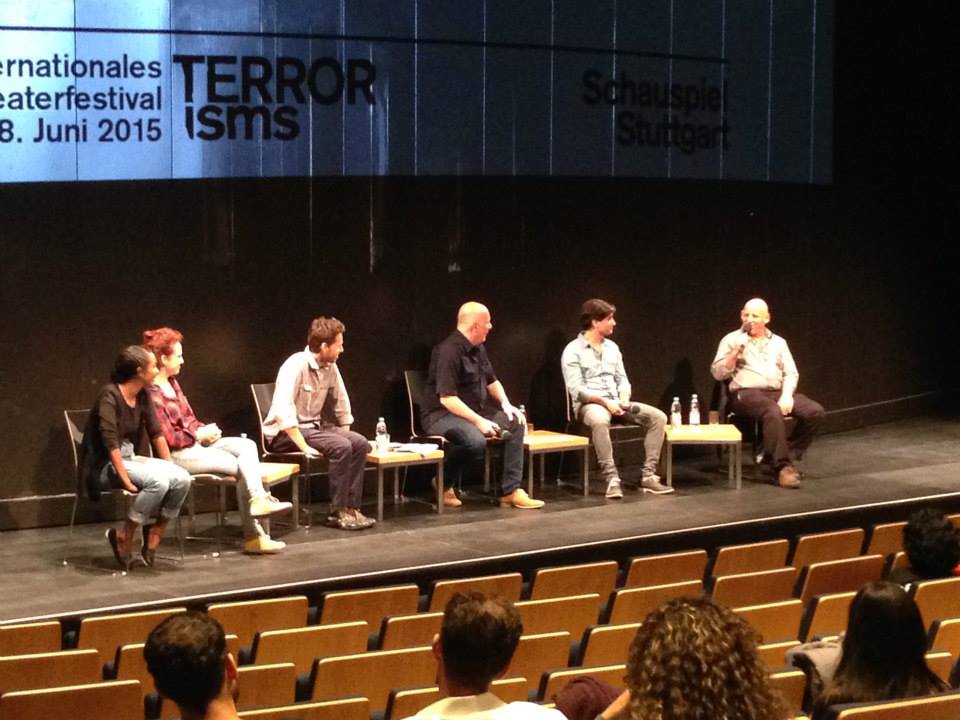
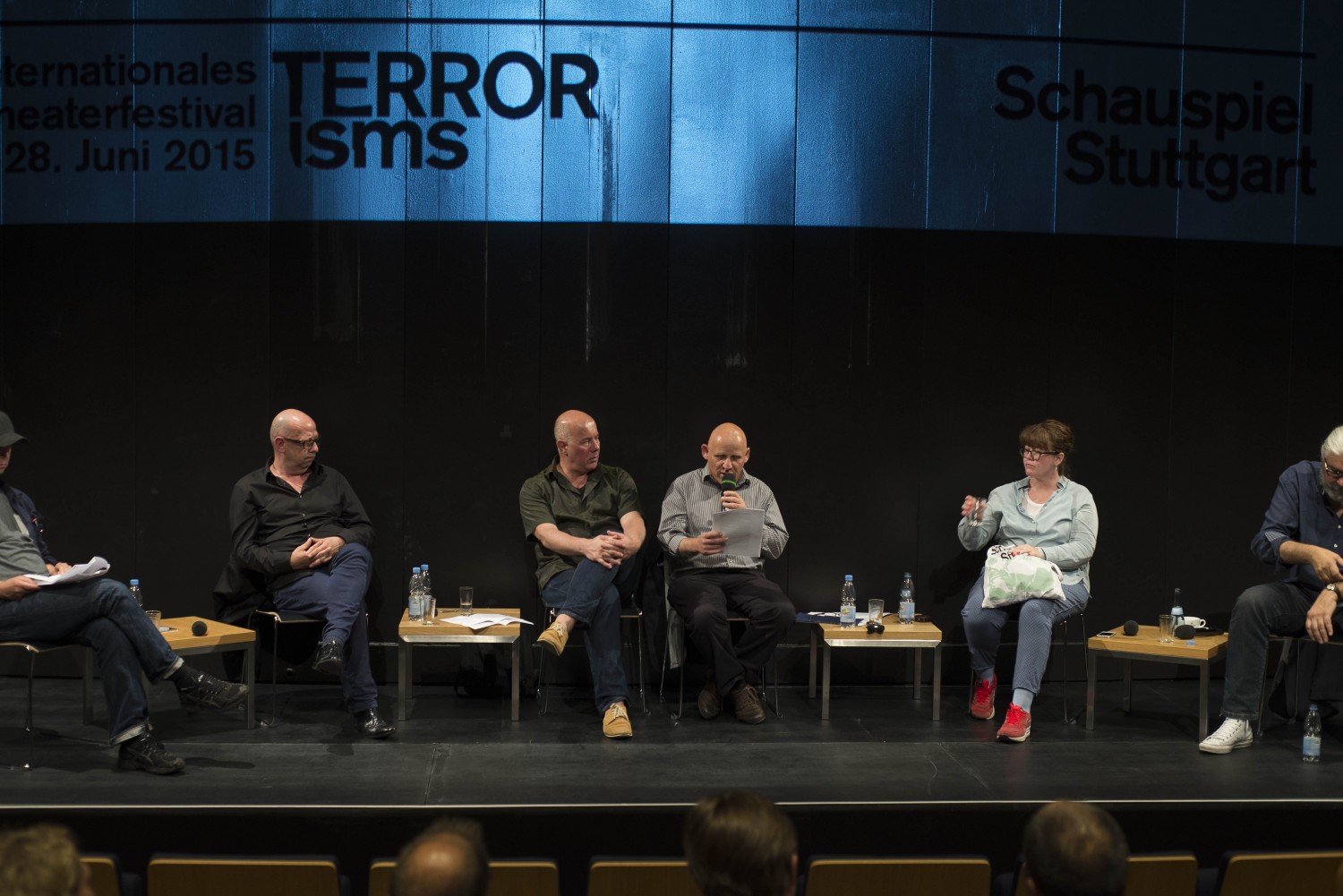
Politics and Theatre. With Ludovic Lagarde, Armin Petras, Ilan Ronen, Gorčin Stojanović, Hanne Tømta. 27 June 2015
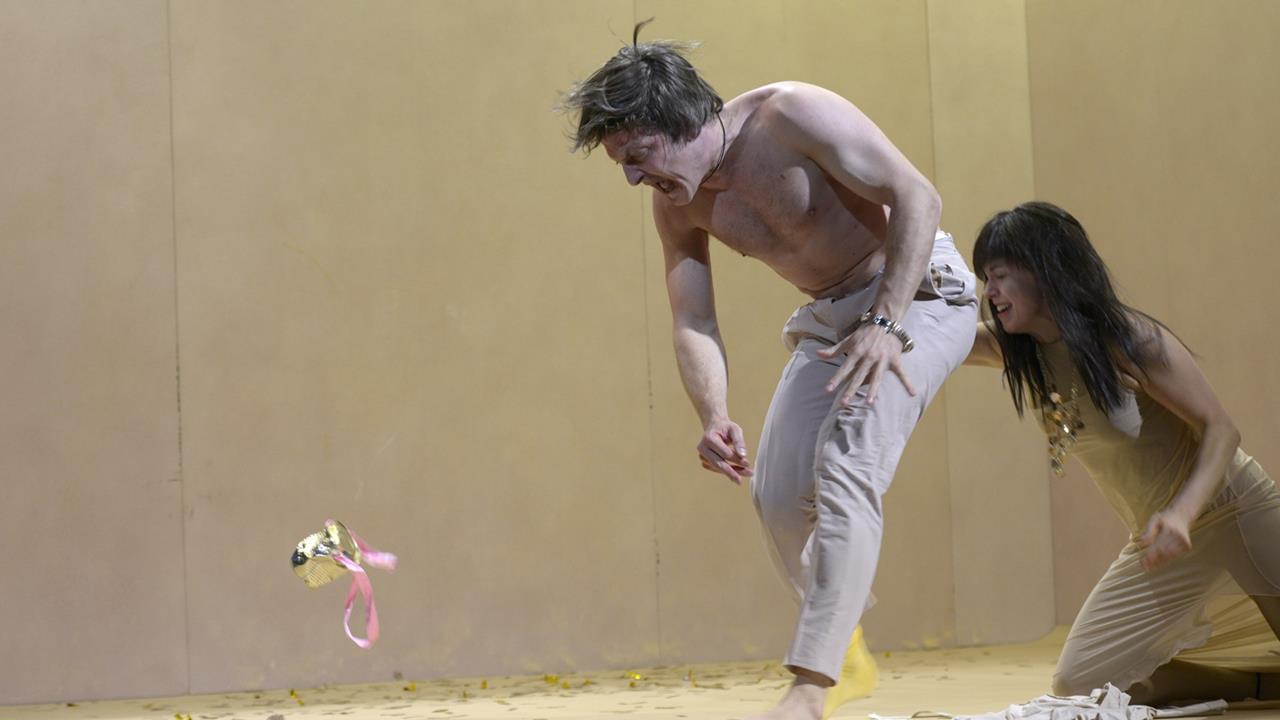
The story takes place in a time when everything swims and blurs.
Five people, five mornings. The city is in state of alert. Is it because of an explosion? Or a radioactive contamination? A dangerous virus? The society’s “burn-out”? Nobody knows. It seems that no foreign enemy can be held responsible. In this exceptional situation, five people develop their own survival strategy.
Paul, consultant in information technology, locks himself in his house with all the means he finds. He even refuses his wife to come in, lest he should get infected. Following the disaster, the life and marriage of August and Julia, who are on the verge of getting a divorce, seem to be accelerating, particularly with the arrival of student Missy, which will act as a catalyst. In order to survive, they all try whatever they can, their attempts being more or less brave, ridiculous, absurd, sad and inappropriate. Ever since the beginning, even before the disaster, their lives were already lost, meaningless and useless. These events provide meaning to the life of some protagonists, even though this is only temporary. When dying, some will even try to get a new start.
Fritz Kater is one of the most important contemporary German playwrights. He received the Mülheimer Dramatiker Prize in 2003 for his play zeit zu lieben zeit zu sterben. That same year, as well as in 2004, he was voted “Author or the Year” in a critics’ survey by Theater Heute. In 2008, Fritz Kater was awarded the Else-Lasker-Schüler-Dramatiker-Prize for his oeuvre. He was furthermore invited to the Berliner Theatertreffen, the Heidelberger Stückemarkt, and multiple times to the Mülheimer Theatertage.
An original play written by Fritz Kater Directed by Armin Petras With Andreas Leupold (Paul), Holger Stockhaus (August), Anja Schneider (Loretta), Hanna Plaß (Missy), Manja Kuhl (Julia)
Stage setting Natascha von Steiger Costume Patricia Talacko Video Rebecca Riedel Music Thomas Kürstner, Sebastian Vogel Choreography Berit Jentzsch Dramaturgy Carmen Wolfram
Premiere on the 26 October 2013 At the Schauspiel Stuttgart